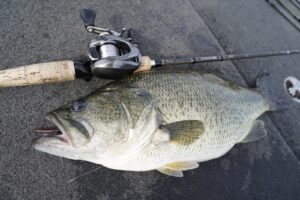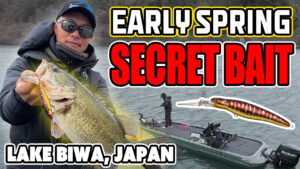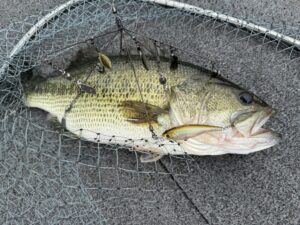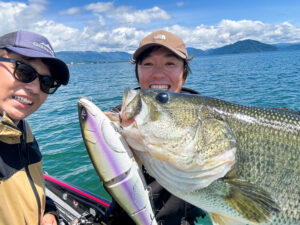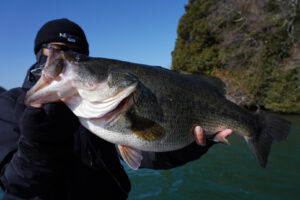
If you have watched any Japanese bass fishing content in the last few years, you have seen the Deps Sakamata Shad. It is the bait at the center of the mid-strolling boom, and on Lake Biwa, where I guide year-round, it is not a trend. It is a tool we tie on almost every single day, and it has put bass from 58 to 62 cm (23 to 24.5 inches) in my boat.
Most English articles about the Sakamata Shad stop at “it is a Japanese soft jerkbait.” This one does not. The mainstream way to fish this bait in Japan is jighead mid-strolling, so that is where we start. Then I will cover the weightless rig we add to the rotation on Lake Biwa, the other rigs you will see here, and how we choose colors, with the full tackle specs.
What Makes the Sakamata Shad Different
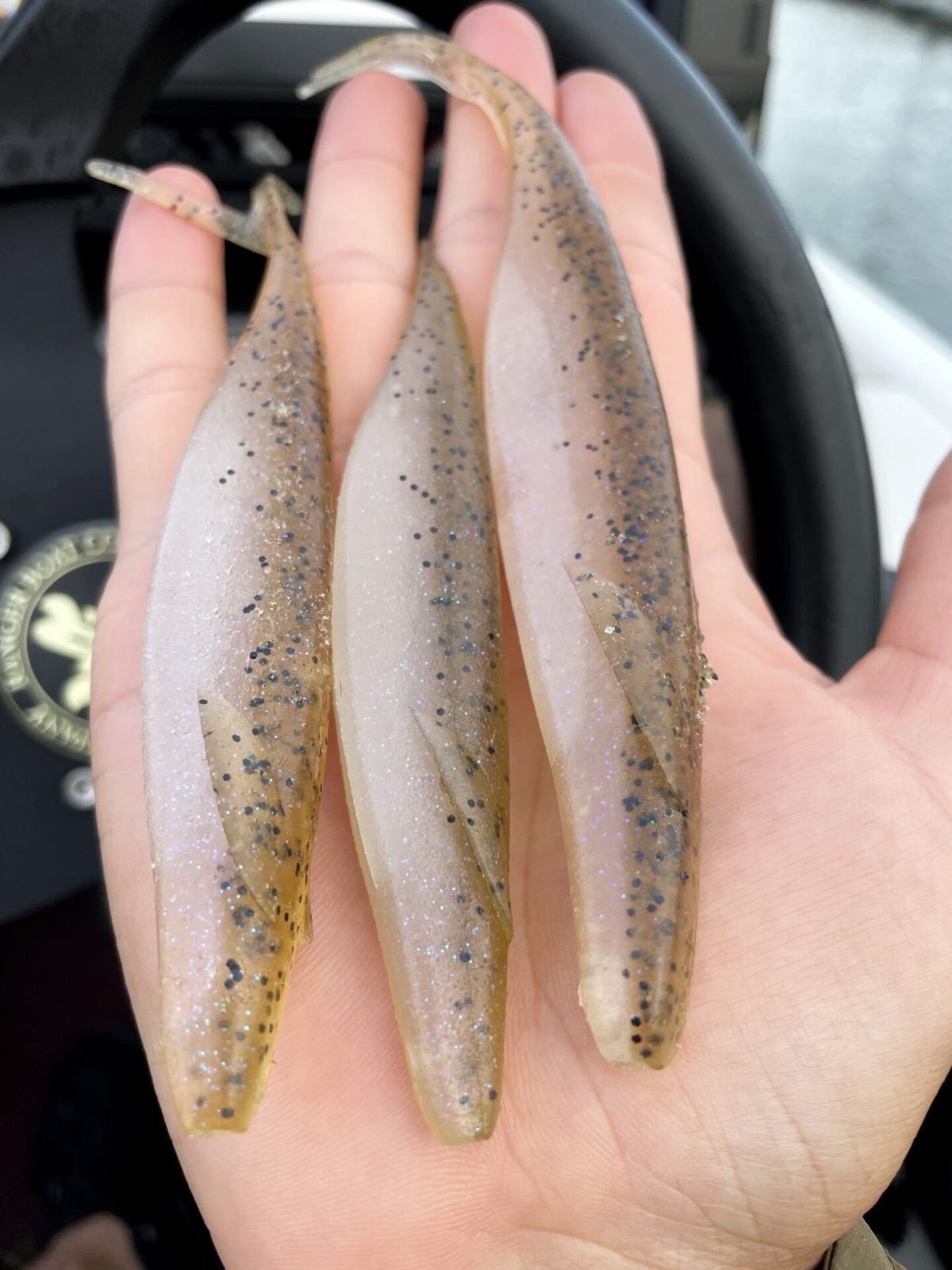
Two things define this bait. On a jighead retrieve it produces a tight rolling action, a rhythmic flash as the back and belly alternate, which is exactly what mid-strolling is built on. And on the jerk, it darts sideways much farther than a typical soft jerkbait, a long horizontal slide that pulls bass out of cover. Japanese anglers built distinct techniques around each behavior, and that is how this guide is organized.
The Main Technique: Jighead Mid-Strolling
“Mid-strolling” (midosuto) is the technique that made this bait famous, and it is how the Sakamata Shad gets fished most days in Japan. Most American anglers have heard of it, but few have seen it explained with real specs. You swim a jighead-rigged bait through the middle of the water column while shaking the rod, so the bait rolls and flashes continuously. The Sakamata Shad, in the 4 to 6 inch sizes, is one of the best baits ever made for it.
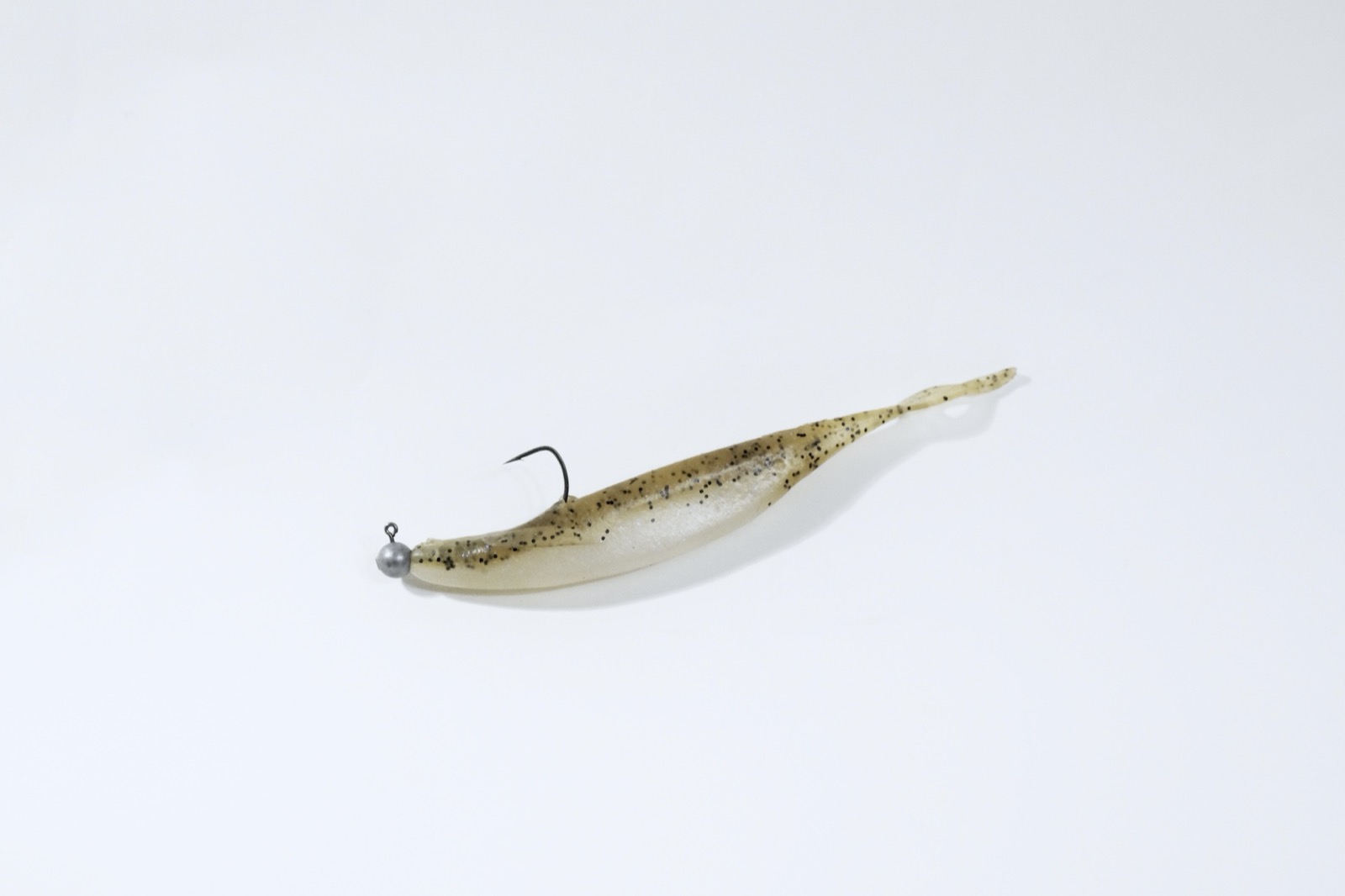
Setup
- Jighead: Gamakatsu Horizon Head LG. #1/0 for the 5 inch, #2/0 for the 6 inch
- Weight: 3.5 g (1/8 oz) as the base for water down to about 6 m (20 ft). Go 4.4 to 5.2 g (5/32 to 3/16 oz) for deeper water or wind
- Around brush piles and reefs, switch to the weed-guard version (Horizon Head LG+G)
- Use the normal-weight Sakamata, not the heavy-weight model. The heavy version lowers the center of gravity and kills the roll
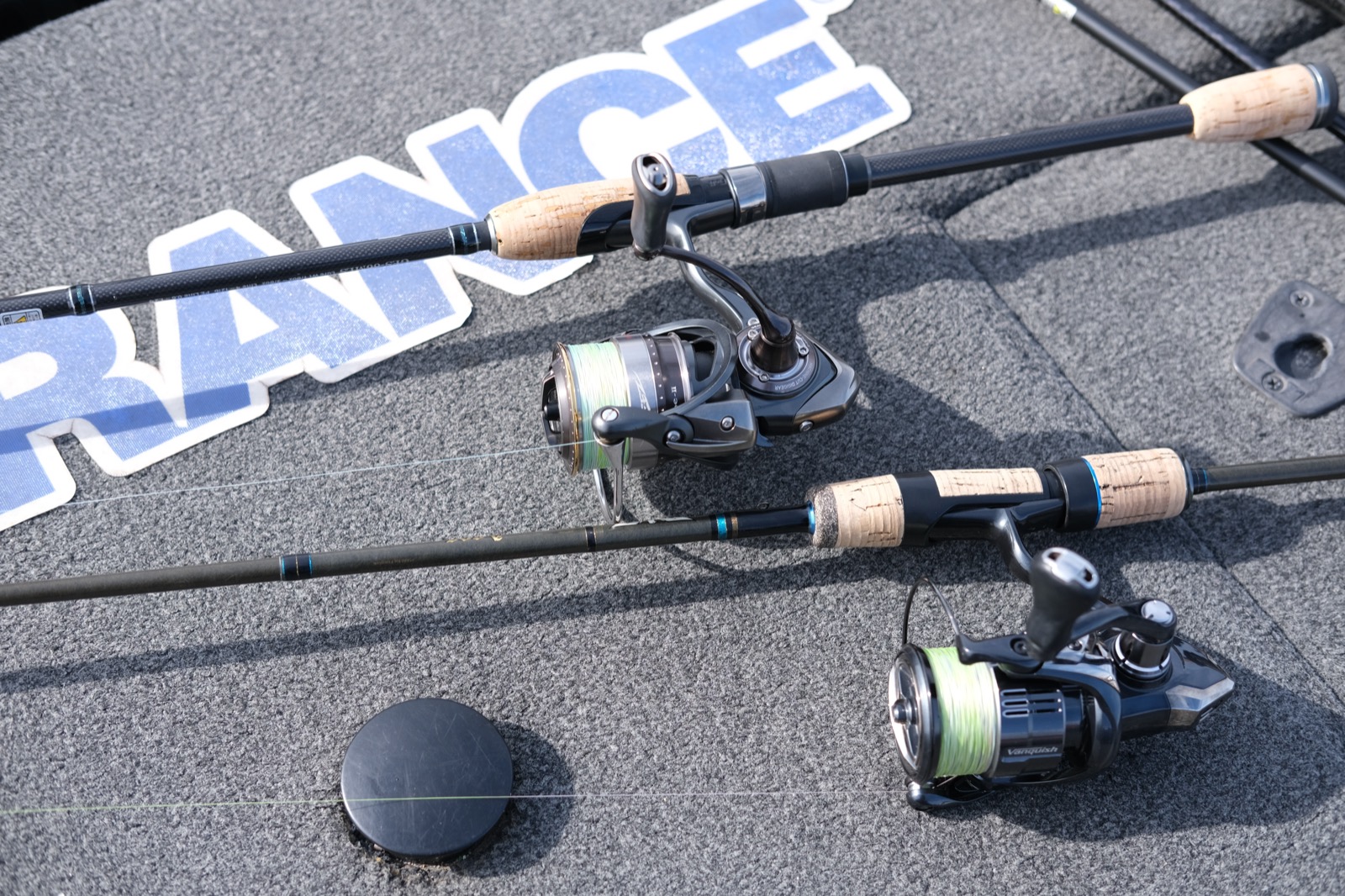
- Rod: a dedicated light mid-strolling rod (I use a Fenwick ACES 66SLJ “Mid Strolling Special”; the whole outfit weighs about 265 g with a Vanquish 2500S)
- Line: floating PE 0.6 to 0.8 with an 8 to 10 lb fluorocarbon leader. The PE must float. A sinking line drags the bait out of posture, and the low stretch of PE is what transmits the shake into that rolling action and drives hooks home at distance
The Retrieve
Cast past the cover and count the bait down to the bottom. On the fall, keep the line “not tight, not slack,” especially important on Biwa’s north lake where current will bow your line. Then start a slow retrieve while shaking, keeping light contact with the cover the whole way back to the boat.
The three bite windows: the first contact with the cover, while the bait is tracking along it, and the moment it clears. Stay ready at all three.
The Lake Biwa Addition: Weightless Rigging (Sizes 6 and 7 Inch)
Mid-strolling may be the mainstream, but on Lake Biwa we lean just as hard on the weightless rig, which Japanese anglers call the no-sinker. This is the rig for post-spawn recovery fish through early summer, when bass school up and feed over weed in open water, and it is where the Sakamata’s wide sideways dart gets to shine.
Setup
- Sakamata Shad 6″: Gamakatsu Elite Tourer 316R, #5/0
- Sakamata Shad 7″: Gamakatsu Elite Tourer 316R, #6/0
- No swivel, tied direct
- Rod: North Fork Composites ZC69HJW / Reel: Shimano Metanium XG / Line: 20 lb fluorocarbon
The Retrieve: 2 Jerks, 3 Seconds of Fall
That cadence is the baseline. Two sharp jerks make the bait slide wide, then you let it fall on a controlled slack line for about three seconds. Adjust the fall time to the water depth and the height of the weed tops. Most bites come on the fall.
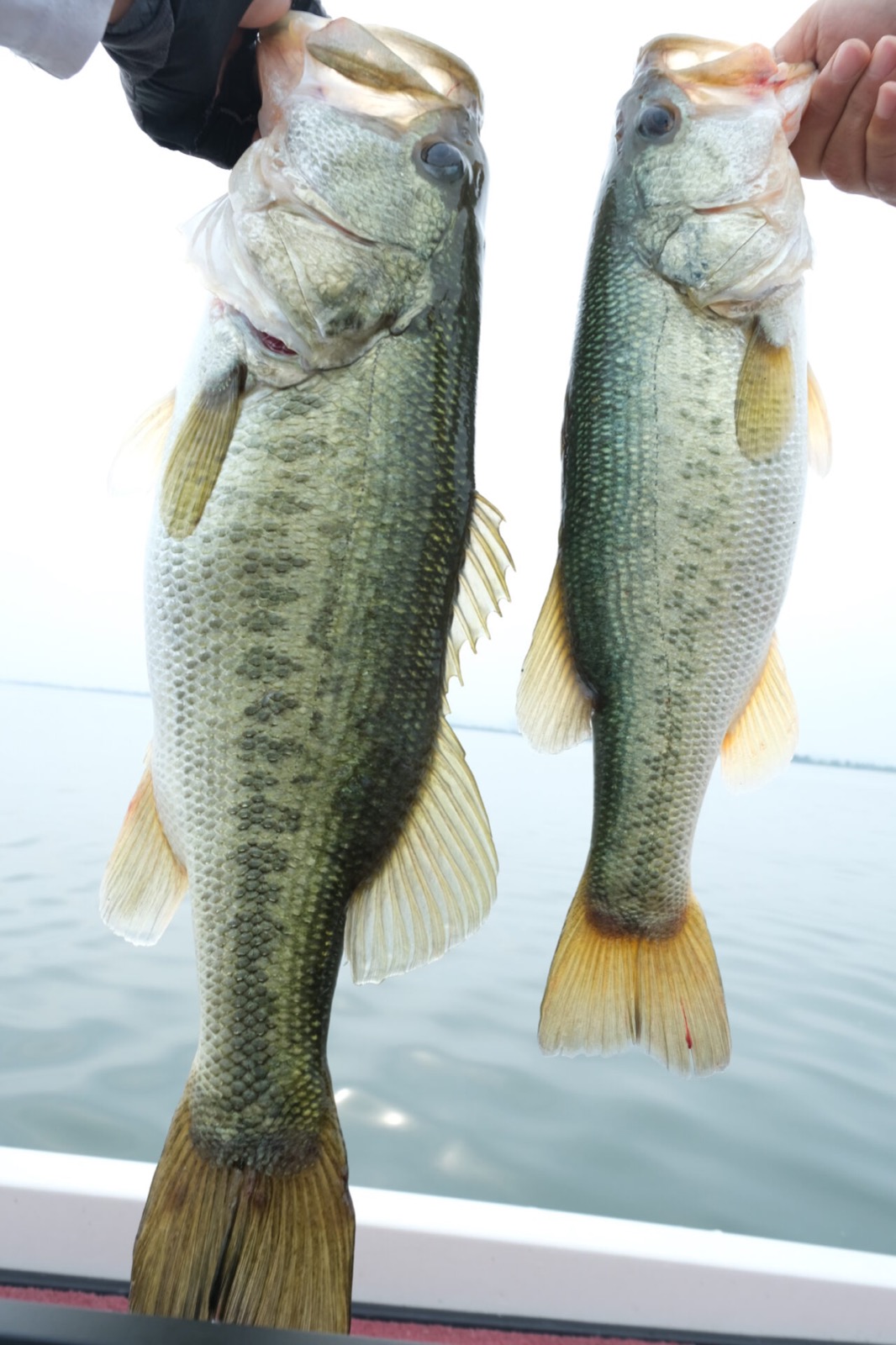
Where to throw it: open weed flats, anywhere bait is getting pushed, boils, nervous water, or when your electronics show a school. Find the school with your graph and your eyes, then work the bait over the weed efficiently.
When a fish takes it: the line just gets pulled away. Do not panic-set. Drop the clutch, let the fish load up, then wind into it with a firm reel set. A follow-up sweep is fine.
Other Rigs You Will See in Japan
Those two cover most of our guiding days, but the Sakamata Shad is a platform, and Japanese anglers rig it several other ways. Hover-strolling (hobasuto) takes the same rolling idea shallower and slower, typically with the 4 inch on a light guard-pin style hook and a small nail weight in the belly, for suspended fish that will not chase. And Deps makes a heavy-weight model of the bait itself: it casts farther and runs deeper on the same rigs, at the cost of some of that signature roll, so we treat it as a tool for covering water rather than a replacement.
Color Selection: The Three-Color System
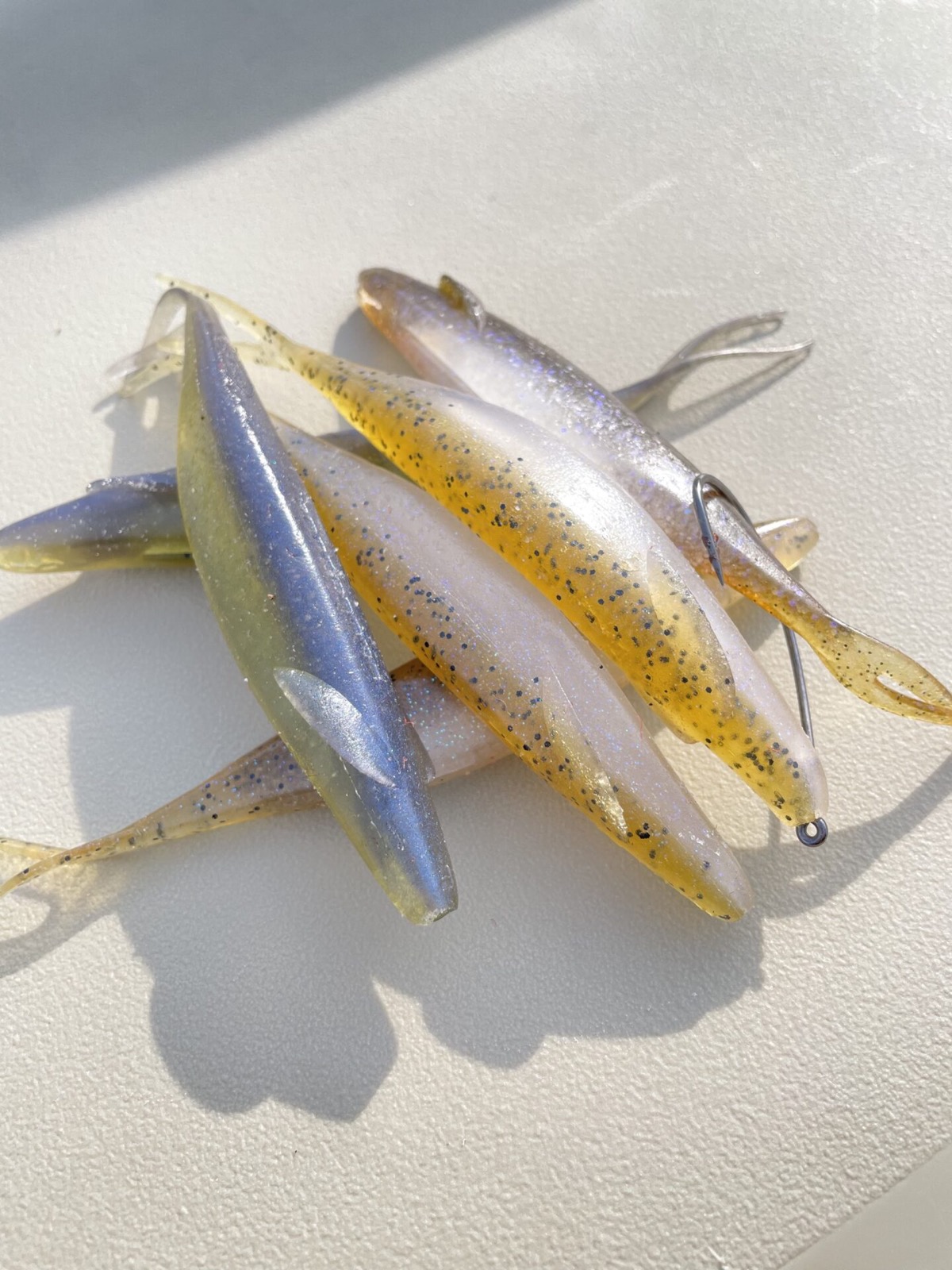
Rather than carrying thirty colors, we run a fixed three-color system for each rig. Deciding your rotation in advance removes hesitation on the water, and that alone catches more fish.
For Mid-Strolling
- #114 Champagne Pepper Neon Pearl: the “super natural” one. Clear to lightly stained water, and the essential color in early spring when bass feed on slender baitfish
- #22 Golden Shiner: stained water and low light, when you need more presence
- #96 Wakasagi: for the days fish refuse any flake
For Weightless Rigging
- Biwako Wakasagi: strong back-and-belly contrast for a crisp silhouette, also good deep on the jighead
- Champagne Pepper Neon Pearl: the default when in doubt
- Watermelon Pro Blue: low light or ultra-clear tough conditions. Loud on the jerk, natural on the fall, no flake
Can You Get One in the US?
Deps distribution outside Japan has improved a lot, and major US tackle retailers and JDM import shops now stock the Sakamata Shad in the core sizes. If your local selection is thin, the sizes to start with are the 5 and 6 inch, and the three mid-strolling colors above.
Fish It Where It Was Born
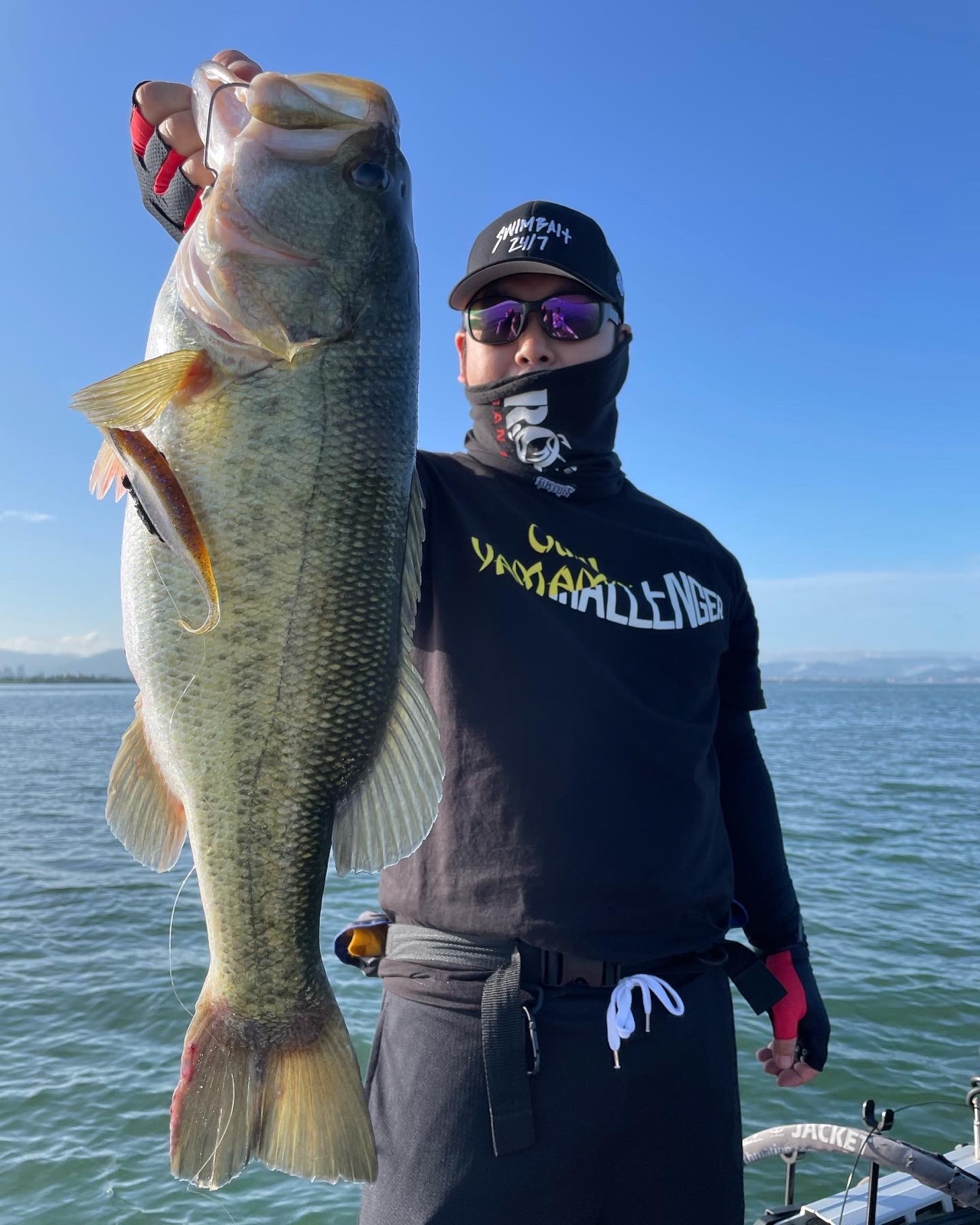
Every technique in this article was refined on Lake Biwa, the lake that produced the world-record largemouth. If you are planning a trip to Japan, this is exactly what a day on our boat looks like: we hand you a rod rigged with a Sakamata Shad and teach you mid-strolling on the water where it was invented. Our Lake Biwa fishing guide service includes all tackle, and English support.
Interested in the bigger stuff too? See our guide to the best glide baits in Japan, or read how Japanese guides actually use the Bait Finesse System (BFS).