The neko rig came out of Japan, and American anglers adopted it fast. But the version that traveled abroad is the light one: a small worm, a tiny nail weight, a slow shake on light line. On Lake Biwa, the neko rig is something else. It is the technique I fish more than any other, all year, and it is heavier, faster and far more active than most anglers outside Japan realise.
This is the full breakdown of the Japanese heavy neko: the exact weights, the rod and reel spec that makes it work (including one counterintuitive choice most people get wrong), and the retrieve we call swimming the neko.
What Makes the Heavy Neko Different
Three things separate it from the finesse neko rig you already know.
- Weight: nail weights of 3.5 to 7 g (1/8 to 1/4 oz), not 1/32 or 1/16 oz
- Worm: a thick 5.5 inch straight worm (I use the Boreas Ano Straight)
- Action: it is never dead-sticked. You shake it while you are reeling, continuously, so the bait keeps moving and never stops
That last point is the whole technique. Everything in the tackle setup below exists to let you shake a rod tip and turn a reel handle at the same time, for eight hours, without the bait climbing off the bottom.
The Tackle: Why Spinning, and Why Low Gear
Rod
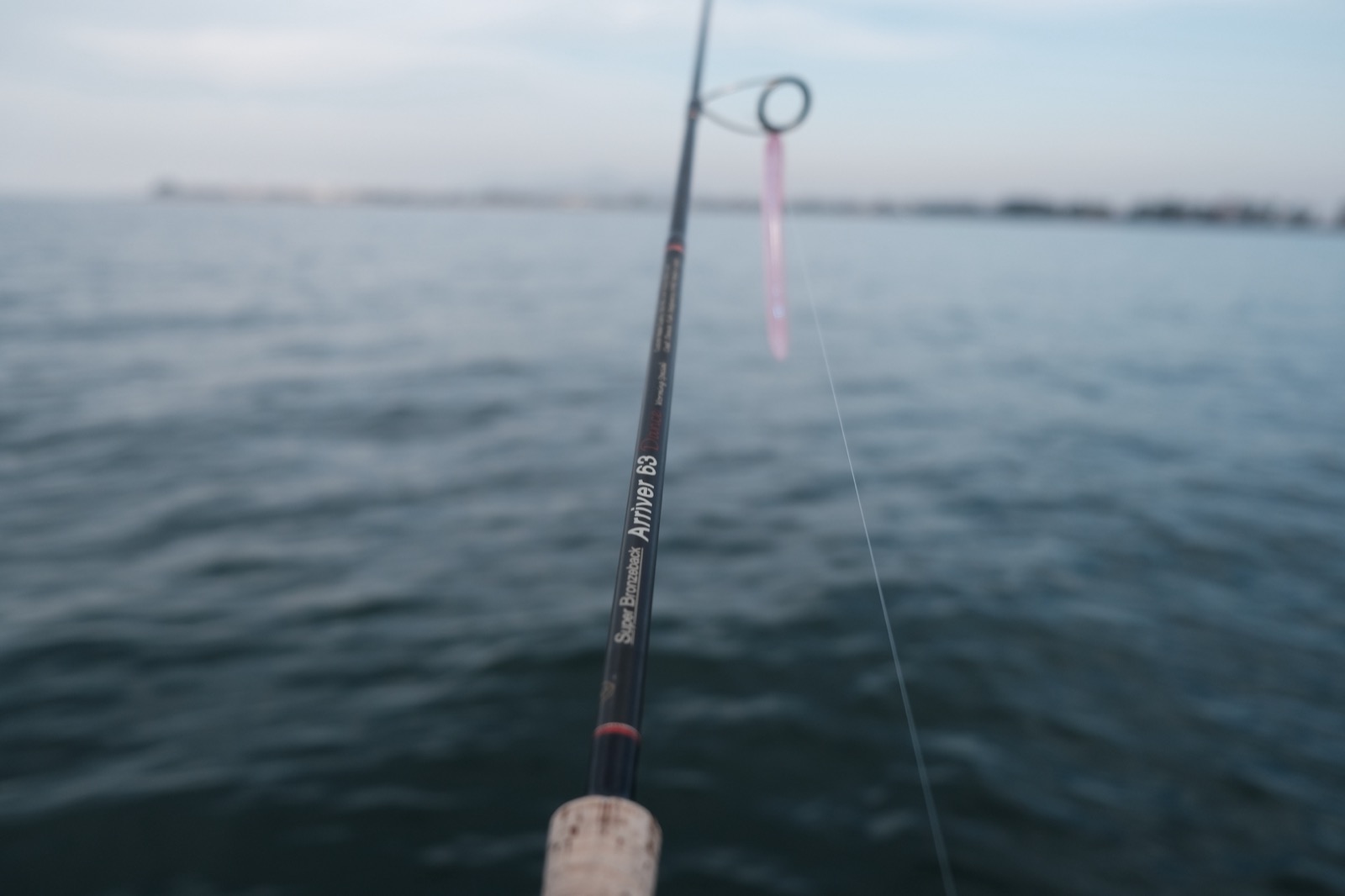
A medium-light spinning rod around 6’3″ with a tip that loads. Spinning, because you have to shake the rod vertically without fatigue, and a baitcaster fights you on that motion. The rod needs backbone to move a 7 g rig and drive a hook in deep water, but a soft enough tip to give the worm its action.
Mine is a shop-original rod (Arriver 63 Dance from Lure Shop Ohno) that is hard to get outside Japan. Two production rods with the same character: North Fork Composites ZFX ZS66ML and the Daiwa Black Label SG 6101L+FS. The length matters more than the badge. Keep it short enough to shake accurately, because a long rod gets tiring and sloppy.
Reel: Go Low Gear, Not High
This is the part almost everyone gets wrong. Because you are shaking while reeling, a high gear reel pulls the worm up off the bottom before you notice. You want roughly 70 to 80 cm (28 to 31 inches) of line per handle turn. A Shimano 2500-size power gear reel is about 78 cm per turn, which is the sweet spot. I fish a Shimano Stella 2500S; a Vanquish 2500S or Daiwa Luvias FC LT2500S does the same job for much less.
One more detail we teach every guest: hold the rod in your dominant hand and reel with the other. Your dominant hand is the one that feels the bottom and controls the shake, so it should be on the rod, not the handle. I am right handed, so I reel left.
Line and Hook
- Fluorocarbon 6 lb as standard, 7 lb around anything tricky (I run 7 lb most days)
- Fluorocarbon 10 lb around rock and sunken timber where a fish can break you off
- Supple line matters here. Stiff line fights the constant shake
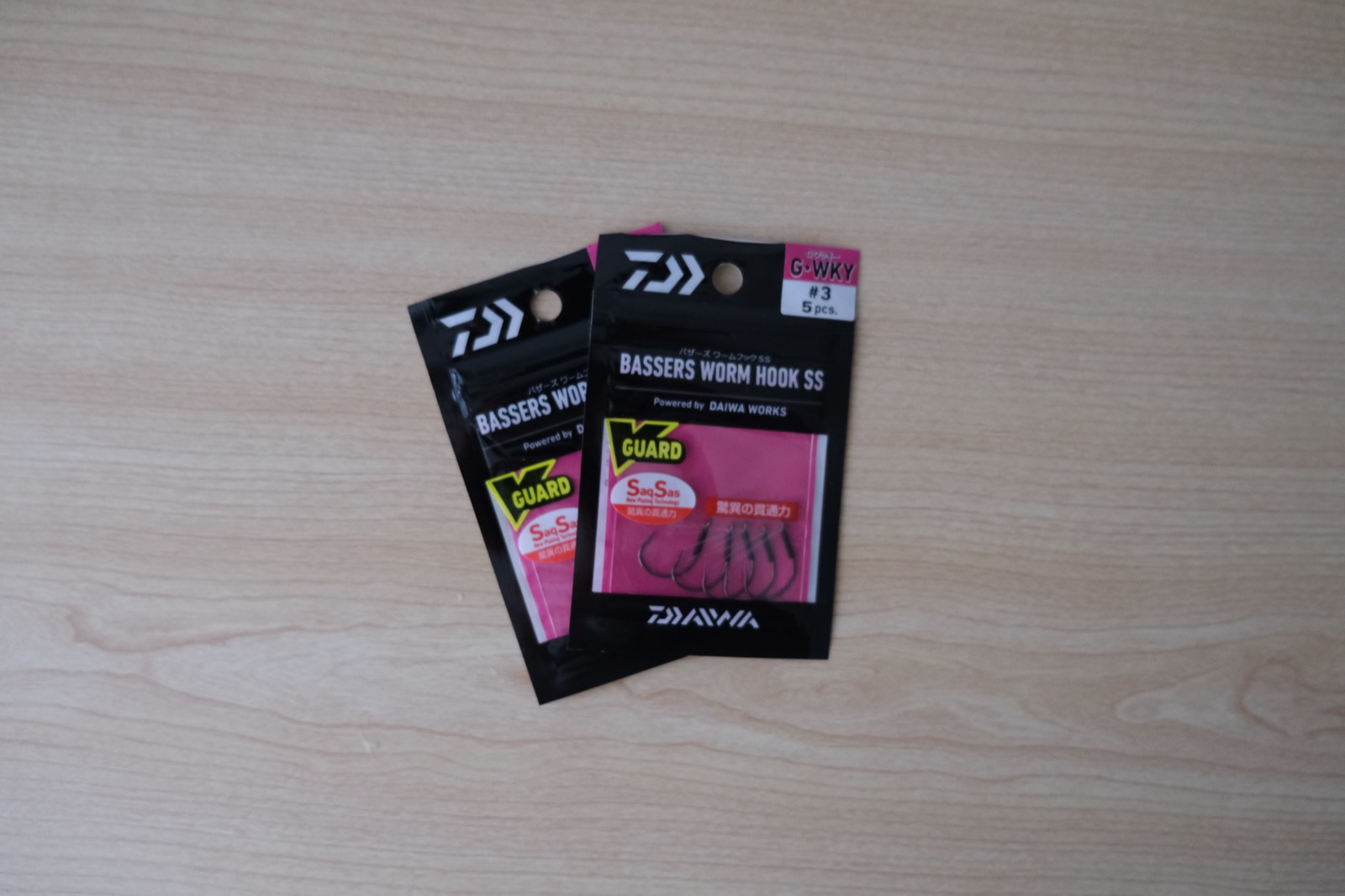
- A guard-style worm hook keeps you fishing in wood and rock instead of re-rigging
The Retrieve: Swimming the Neko
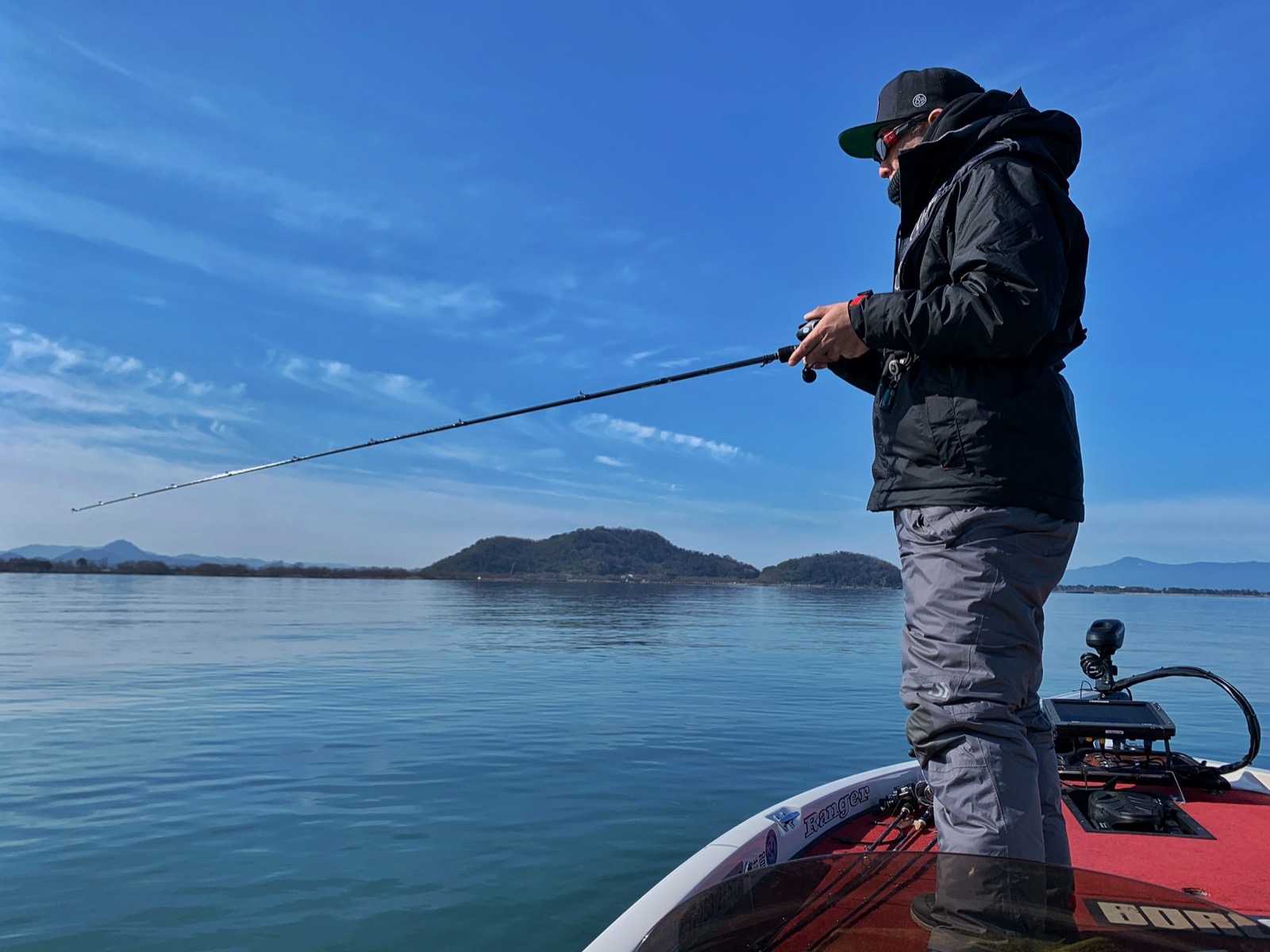
Here is the retrieve that makes this rig a year-round producer rather than a last-resort finesse option.
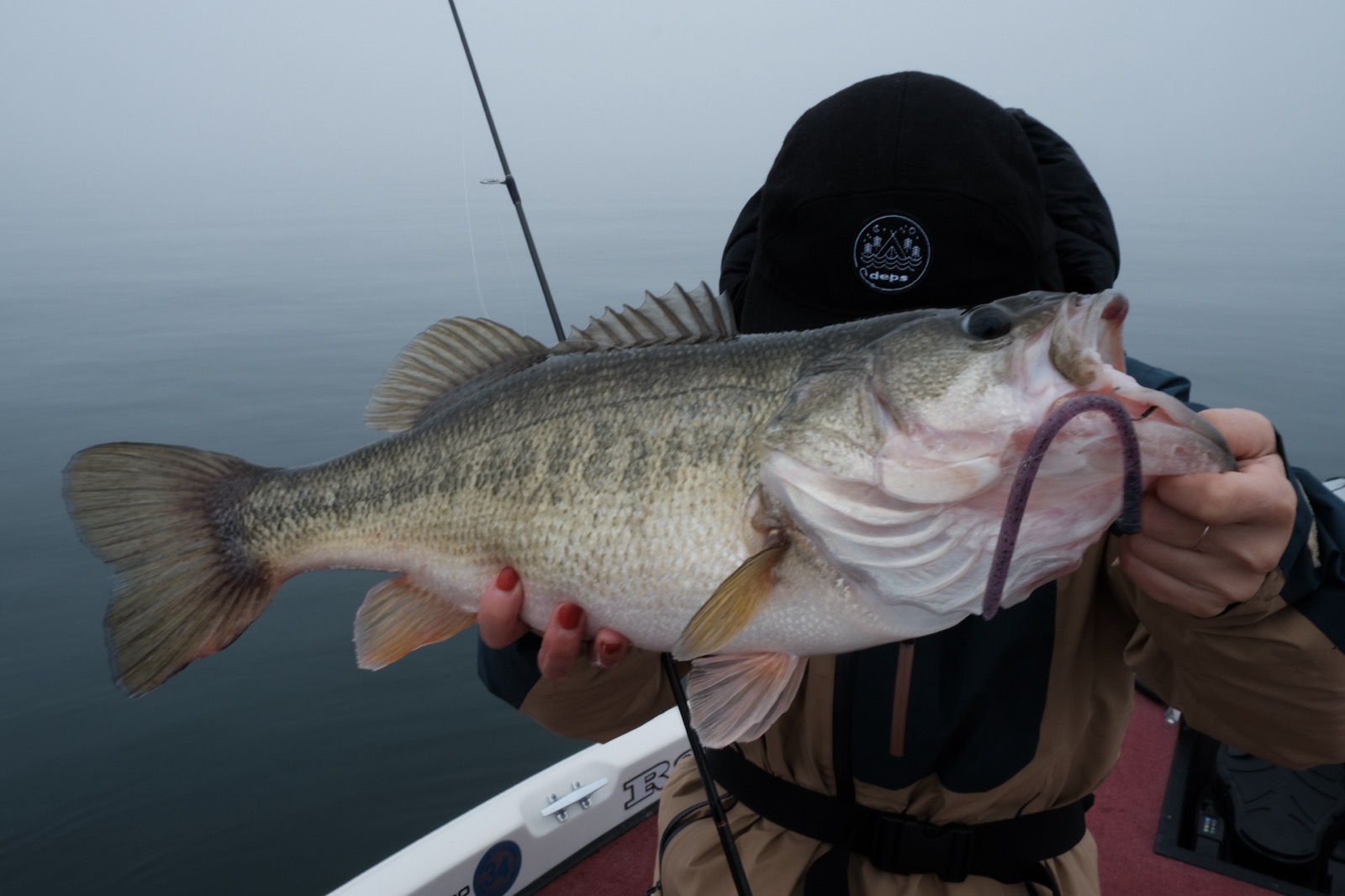
You tap the bottom with the worm and keep it swimming at the same time. Shake the rod tip while slowly turning the handle, letting the nail weight tick the bottom, then keep it moving. The bait travels horizontally along the bottom instead of hopping vertically in one spot. That horizontal track is why it draws fish that will not chase anything else, and it is especially strong in cold water.
The reason the low gear reel matters should now be obvious: the moment you wind too fast, the worm lifts and the whole presentation stops working.
Depth, Cover and Timing
The same rig covers an absurd depth range. I fish it from 30 cm (1 ft) of water down to 10 m (33 ft) with the same rod and the same feel, which is exactly why it stays tied on all year.
- Shallow: hard bottom under a metre of water with sunken wood on it. In early spring this is a big fish spot, not a numbers spot
- Deep: man-made structure worked depth zone by depth zone until you find the level the fish are using
- Season: it produces year round, and it is at its best in cold water, when the swimming retrieve beats vertical presentations
One honest warning: hooksets in deep water take practice. With a lot of line out and a soft tip, guests often get bites and fail to convert them for the first hour. Keep contact, take up slack before you set, and lean into the fish rather than snapping at it.
Worm and Colour
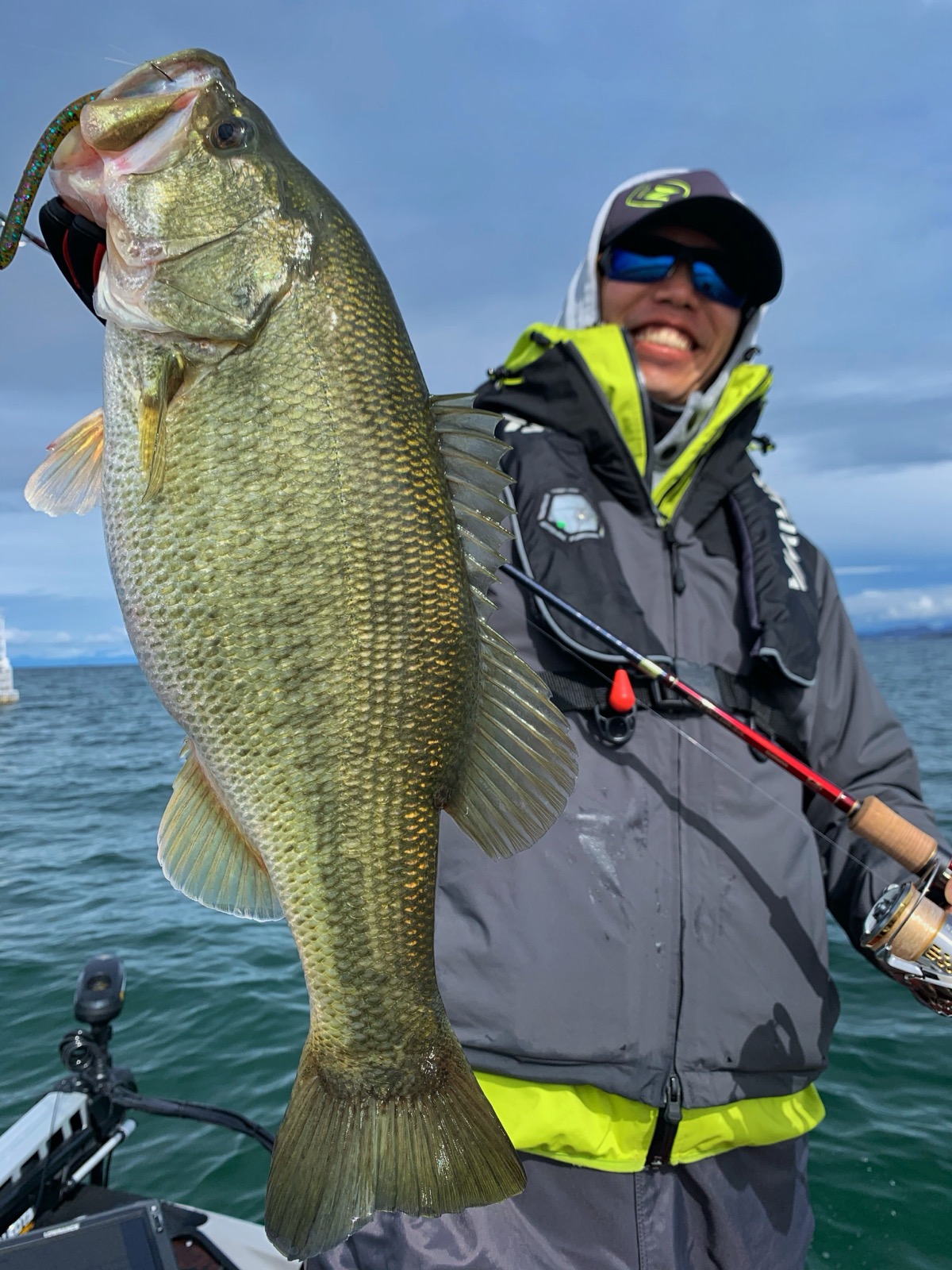
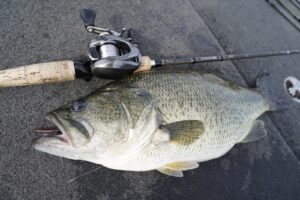
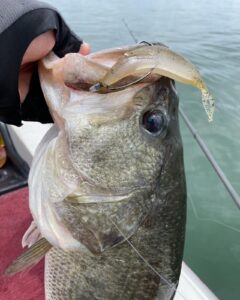
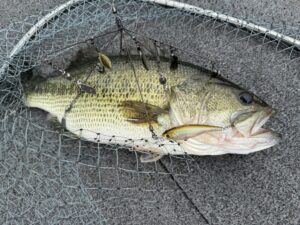
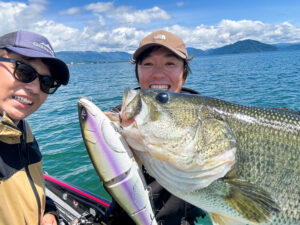
The Boreas Ano Straight 5.5 inch is the bait this whole setup is built around. Its flat-sided body pushes more water than a standard straight worm, which is what lets a subtle shake register to a fish in deep or stained water. The colour I put in a guest’s hand more than any other is #183 Kojikoji Candy. In January a guest landed a 56 cm fish on this rig, and one March morning another put a 54 cm, 2.6 kg bass in the boat swimming it over hard bottom.
Learn It on the Water That Built It
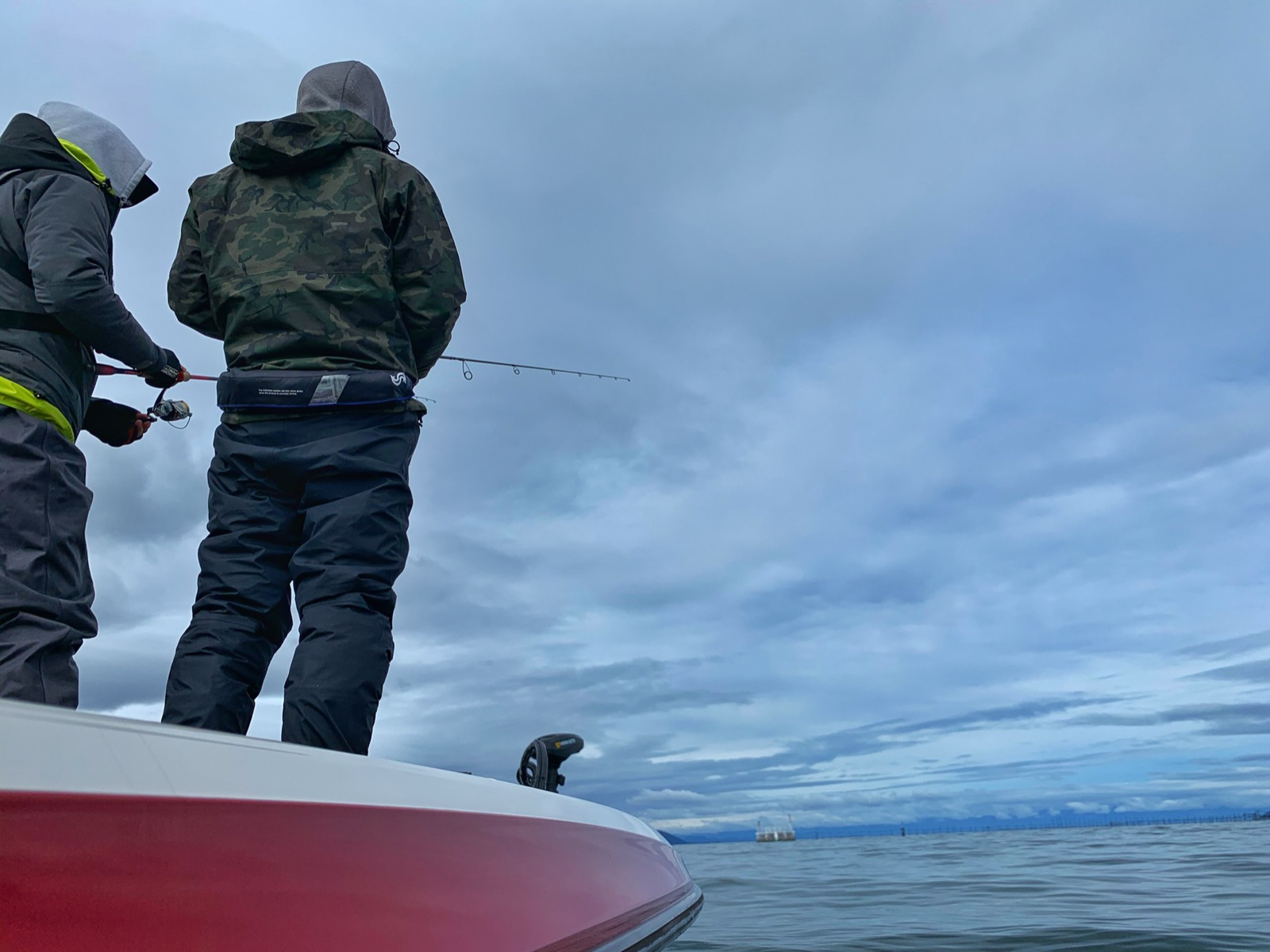
Reading about a shake-and-reel cadence only gets you so far. It is a feel technique, and the fastest way to own it is to have someone next to you correcting the rhythm in real time. That is most of what I do on a guide day: hand you the rod already rigged, get your reel hand right, and fix the shake until the bites start.
Our Lake Biwa fishing guide service includes all tackle and English support, and the neko rig above is on the deck every single trip. For the other two techniques we fish hardest here, see our Sakamata Shad complete guide and how Japanese guides actually use the Bait Finesse System (BFS).