The Day Japan Made Bass Fishing History: Manabu Kurita’s World Record from Lake Biwa
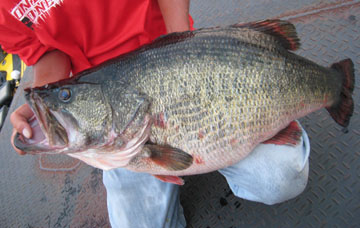
On July 2, 2009, Japanese angler Manabu Kurita caught a largemouth bass at Lake Biwa that weighed 10.12 kg (22 lbs 4 oz) and measured 73.5 cm (28.9 inch) in length.
The fish officially tied the world record set by George Perry in 1932, which had remained unbeaten for 77 years.
After verification by the International Game Fish Association (IGFA), Kurita’s catch was officially recognized as a world record–tying largemouth bass.
This historic event brought international attention to Lake Biwa and to Japan’s advanced bass fishing techniques, solidifying the country’s place in modern bass fishing history.
What Is the World Record for Largemouth Bass?
The largemouth bass world record stands at 10.12kg (22lb 4oz), a mark shared by two anglers on opposite sides of the world. George Perry caught the first record-setting fish, a 22lb 4oz largemouth, at Montgomery Lake, Georgia, on June 2, 1932. That record stood unmatched for 77 years, until Manabu Kurita landed an identical-weight bass at Lake Biwa, Japan, on July 2, 2009. Both catches are recognized by the International Game Fish Association (IGFA) as co-holders of the all-tackle world record — making Lake Biwa the only place outside the United States to produce a world-record-class largemouth bass.
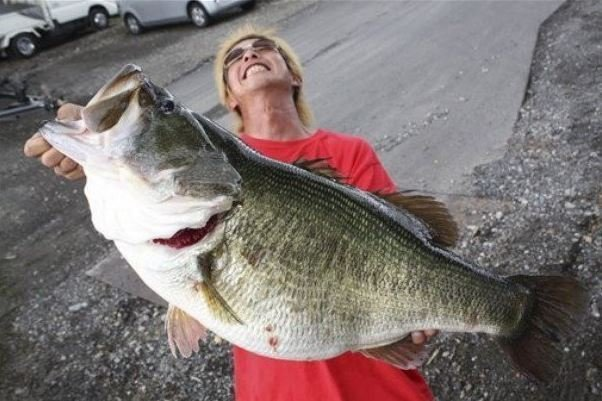
Our Lake Biwa fishing guide service operates on the very water where the world record was set — you can fish the same areas with a local guide.
The Day It Happened – July 2, 2009
- Date
- July 2, 2009
- Location
- Around the Lake Biwa Ohashi Bridge (central Lake Biwa), Shiga Prefecture
- Depth
- 7 meters (23 feet)
- Boat
- SKEETER ZX202 bass boat powered by a Yamaha HPDI ver.2 outboard
- Bait
- Live bait (bluegill)
- Fish Length
- 73.5 cm (28.9 inch)
- Official Weight
- 10.12 kg (22 lbs 4 oz)
- Verification
- Confirmed by the IGFA as a world record–tying largemouth bass
IGFA Recognition and Global Discussion
Following the catch, Kurita’s bass underwent a detailed verification process by the International Game Fish Association (IGFA).
The fish was weighed on a certified scale and measured under the supervision of local officials and media.
After documentation and submission of photos, witness statements, and certification forms, the IGFA officially recognized the fish as a world record–tying largemouth bass in early 2010.
At the time, some discussion arose within the global fishing community about whether the record should be considered a “tie” or a “new record.”
According to IGFA rules, a new world record must exceed the previous one by at least two ounces (about 56 grams) — Kurita’s fish matched George Perry’s record exactly.
Therefore, it was officially listed as a tied world record, standing alongside the original 1932 catch.
While debate persists, most anglers and media professionals agreed that Kurita’s catch was extraordinary. Its size and the fact it was caught outside the United States both proved that Japanese lakes can produce world-record-class bass.
Who Is Manabu Kurita? – His Style and Approach to Trophy Bass Fishing
Before his world-record catch, Manabu Kurita had already established a reputation in Japan as a big bass hunter.
He was known not for luck, but for a consistent ability to locate and catch fish over 70 cm (27 inch) in Lake Biwa — a feat that few anglers can repeat even once in their lifetime.
Kurita’s philosophy is simple yet extreme: “Big bass eat big bait.”
Rather than following trends, he dedicated himself to building and testing giant lures up to 70 cm long and weighing around 3 kilograms.
These hand-carved baits, made from wood and metal, were never intended for sale or promotion.
They were personal tools, designed to imitate the natural prey that the largest bass in Lake Biwa hunt — such as carp, catfish, or large bluegill.
“Big bass eat big bait.”
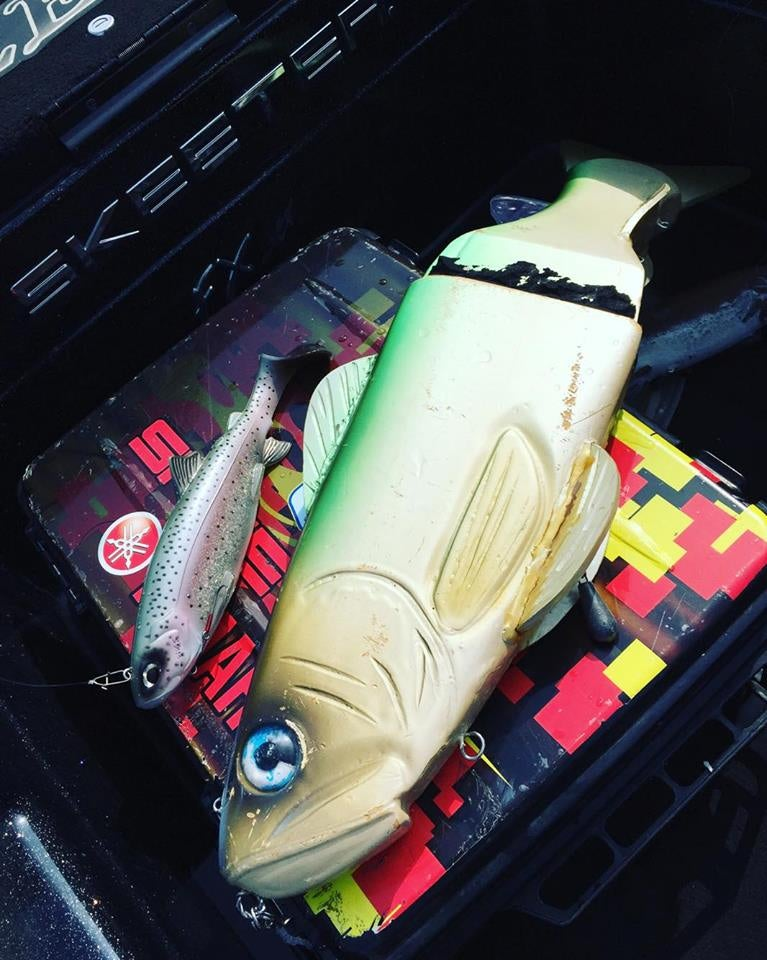
He tested these lures repeatedly on the lake, observing how the biggest bass responded to size, movement, and vibration.
This process was not about catching numbers; it was a pursuit of a single perfect moment — the strike of a true monster.
Even after his world-record catch, Kurita rarely appeared in the media.
He continues to fish quietly, guided by the same belief that results speak louder than words.
In Japan’s bass community, his approach has become legendary, influencing an entire generation of anglers and lure designers.
Legacy and Innovation: The Kilo Fish Project
Kurita’s influence continues to shape Japan’s modern big-bait culture.
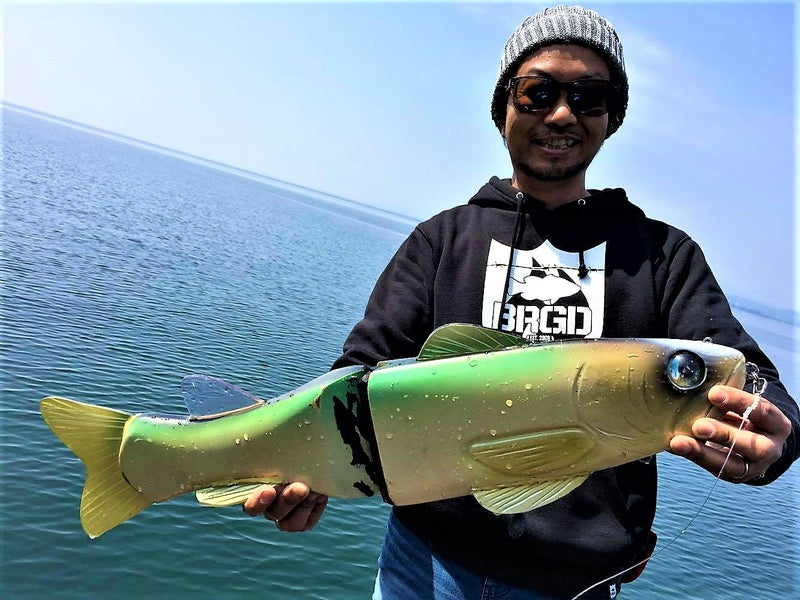
In spring 2025, he and his apprentice Riku Hayashi released a groundbreaking lure called the Kilo Fish — a 1-kg (2.2 lb) class handmade swimbait designed specifically for catching true monster bass.
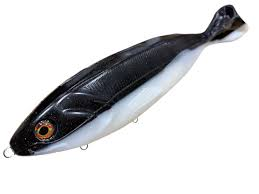
https://www.instagram.com/p/DIdrPOBpbDf
The Kilo Fish represents the evolution of Kurita’s philosophy:
that realism, scale, and precision are the keys to drawing strikes from world-class fish.
Each lure is over 30 centimeters (12 inches) long and handcrafted in Japan with extreme attention to detail.
Individually balanced, tuned, and painted to imitate prey such as carp and catfish,
the Kilo Fish is both a functional weapon for trophy hunting and a collectible piece of craftsmanship.
Released in limited quantities in spring 2025, it immediately gained attention from serious anglers and collectors around the world.
For many, it symbolizes the direct continuation of Kurita’s legacy — proof that Japan’s pursuit of perfection in lure design is still evolving.
🎥 Watch the official Kilo Fish release video on Instagram
Watch the interview with him on YouTube
Home of Giants | Bass fishing in Lake Biwa
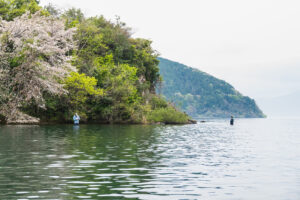
Lake Biwa, located in Shiga Prefecture, is Japan’s largest freshwater lake and one of the most productive bass fisheries in the world.
Covering more than 670 square kilometers (260 sq mi), it provides a unique ecosystem where largemouth bass can grow far beyond the typical size found in North America.
There are several reasons why Lake Biwa consistently produces trophy-class bass:
- Abundant Forage – The lake is home to a rich food chain including Ayu , Hasu, Bluegill, and Crustaceans, offering bass a constant and diverse food supply.
- Mild climate and long growing season – Lake Biwa’s deepest point exceeds 100 meters, holding vast quantities of water. Consequently, water temperatures never drop below freezing even in midwinter, allowing bass to feed nearly year-round and grow faster than in lakes in the northern United States.
- Deep Structure & Clear Water – The combination of deep drop-offs, rock piles, and expansive weed beds gives bass a stable environment to hunt and grow.
The lake’s famous clarity also benefits sight-feeding behavior and selective feeding on large prey. - Genetic Factors – The largemouth bass population in Biwa includes Florida-strain genetics, introduced decades ago.
These genes contribute to faster growth and larger maximum size. Over time, hybridization with Northern strain bass has produced a unique, highly adaptable population.
Together, these conditions create an ideal environment for world-class bass growth.
Lake Biwa continues to produce fish over 60 cm (24 inch) regularly, and double-digit (over 10 lb) catches are not uncommon during spring and fall.
For anglers, Biwa represents more than just a fishing destination — it is a living laboratory of evolution, where nature, genetics, and human culture intersect to create the perfect home for giant bass.
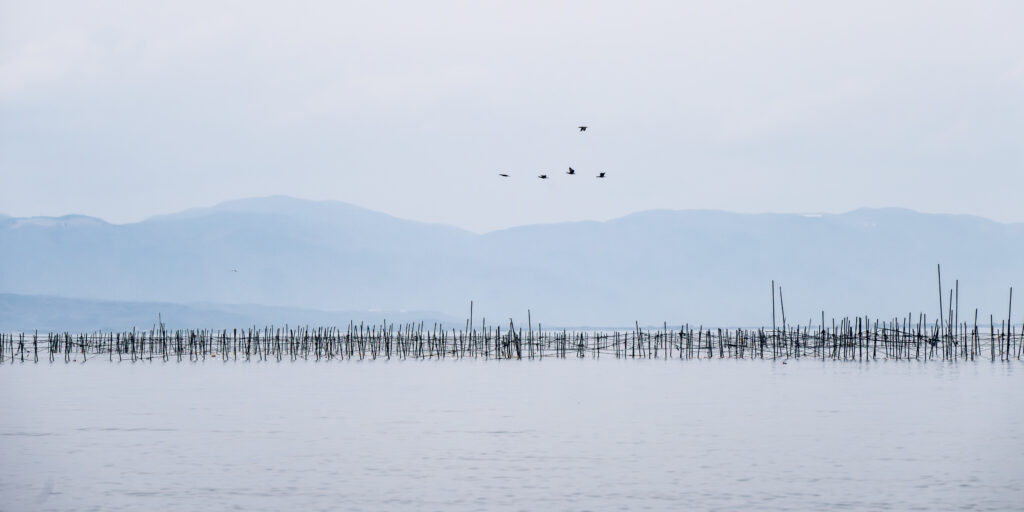
Experience Lake Biwa Yourself
For many anglers, Lake Biwa is not just the home of a world record — it’s the ultimate destination to experience Japan’s bass fishing culture firsthand.
From the deep structures where trophy bass roam to the quiet morning waters beneath the Lake Biwa Bridge, every cast tells a story written by generations of dedicated anglers.
Today, Japan Bass Fishing Agent offers private guided tours on the same waters where Manabu Kurita made history.
Our English-speaking guides provide everything you need — from tackle and boats to local knowledge — allowing you to focus entirely on the experience.
Whether you’re chasing your personal best or simply want to feel the atmosphere of the world’s most famous bass lake,
Lake Biwa promises an unforgettable fishing journey in the heart of Japan.
You Tube Channel
※Please click this image and enter our YouTube channel
Learn more about the attractions of Lake Biwa and how to fish
Attraction of Bass Fishing in Lake Biwa North
Hello. I am Asano, bass fishing guide on Lake Biwa. My
Best Glide Baits in Japan: Top 5 Most Popular Lures for Trophy Bass
You Tube Channel ※Please click this image and enter our
How Did Largemouth Bass Come to Japan? | The Story of Their Introduction
In Japan, largemouth bass are not native to Japan; they
To learn more about the article, click this button.