Lake Biwa doesn’t reward one style of fishing. Between the North Lake’s deep, clear structure and the South Lake’s dense weed flats, plus a technique culture that spans finesse presentations to full-size glide baits, the lake demands a wider tackle box than almost anywhere else in Japan. This guide walks through how the approach changes depending on where you’re fishing and what the bass are doing — and links out to our deeper dives on specific techniques and seasons where relevant. For the basics on the lake itself, start with our complete guide to Lake Biwa bass fishing.
North Lake: Clear Water, Deep Structure, and a Smallmouth Mindset
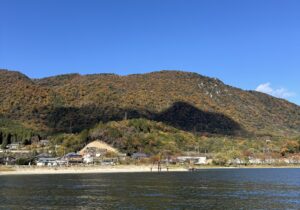
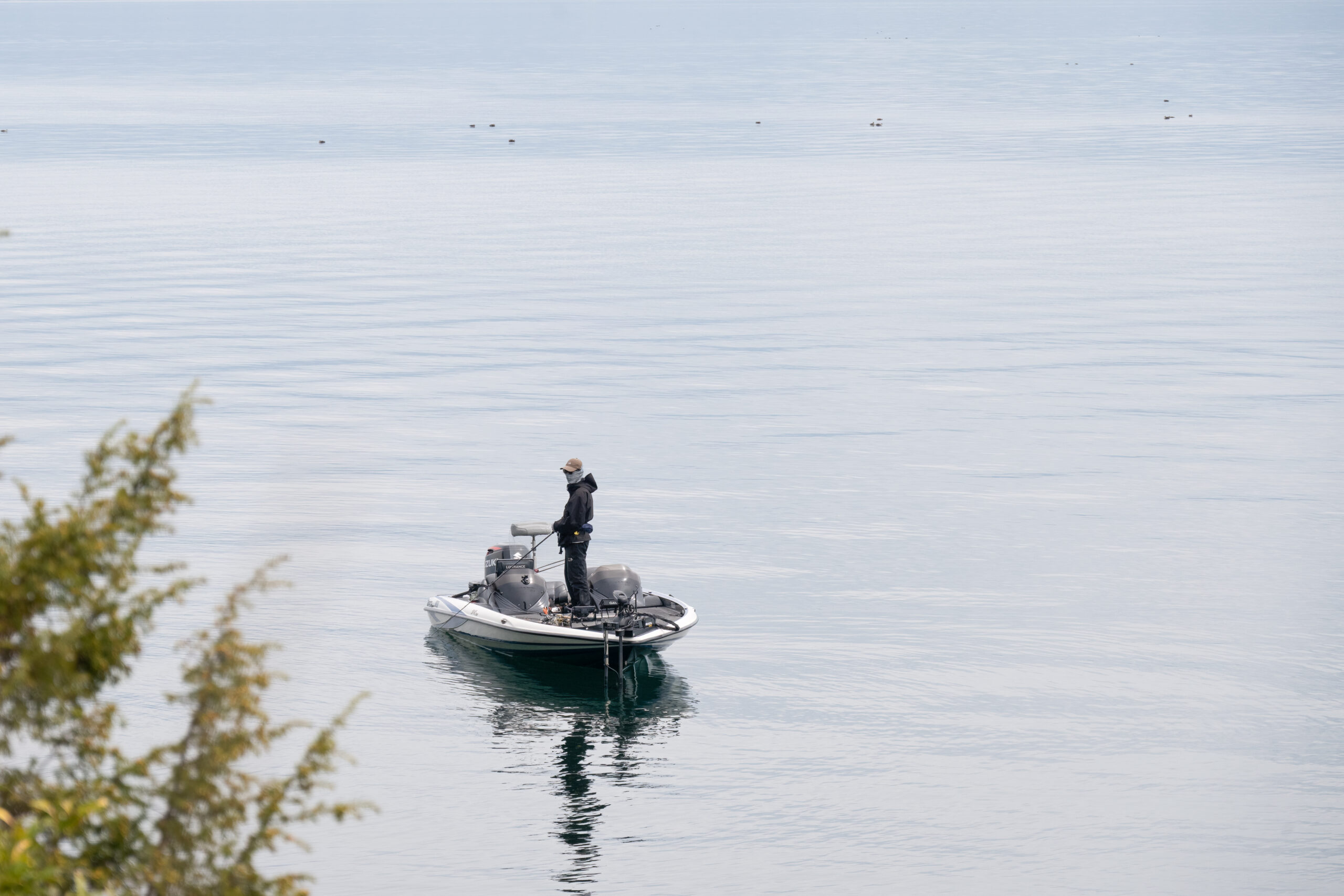
North Lake water runs noticeably clearer than the South Lake, and that clarity changes everything about how bass respond to lures here. Structure fishing dominates — submerged points, ledges, and creek channels well off the bank — and reading that structure with electronics matters as much as lure choice. On calm days you’ll often find anglers standing still on a spot, working sonar and forward-facing sonar to pick apart a piece of structure rather than blind-casting across open water.
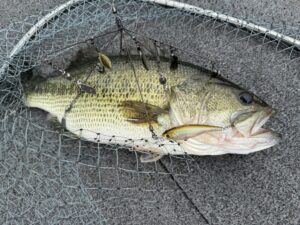
Big baits and Alabama rigs both produce well here, particularly when bass are keyed on schools of baitfish suspended over deep structure. But because the water is so clear, presentations often need to be more delicate than the “big and reactive” approach suggests — in some conditions, the right mindset is closer to smallmouth bass fishing than typical largemouth fishing: smaller profiles, longer casts, and more finesse than the North Lake’s dramatic scenery might suggest. It’s common to run spinning and baitcasting tackle in roughly equal measure here, split between finesse rigs and reaction baits depending on what the fish want that day.
Depth ranges vary widely across the North Lake, from shallow rock points a few meters down to a mix of old submerged structures well beyond casting-and-see depth — decommissioned water intake towers, fish reefs, dredged channels, remnants of traditional eri fish weirs, weed beds, and break lines — which is exactly why electronics play such a large role here. A guide who already knows which specific points and ledges are holding fish on a given day saves hours of blind searching compared to running the whole shoreline on your own.
South Lake: Weed Fishing, Almost Exclusively
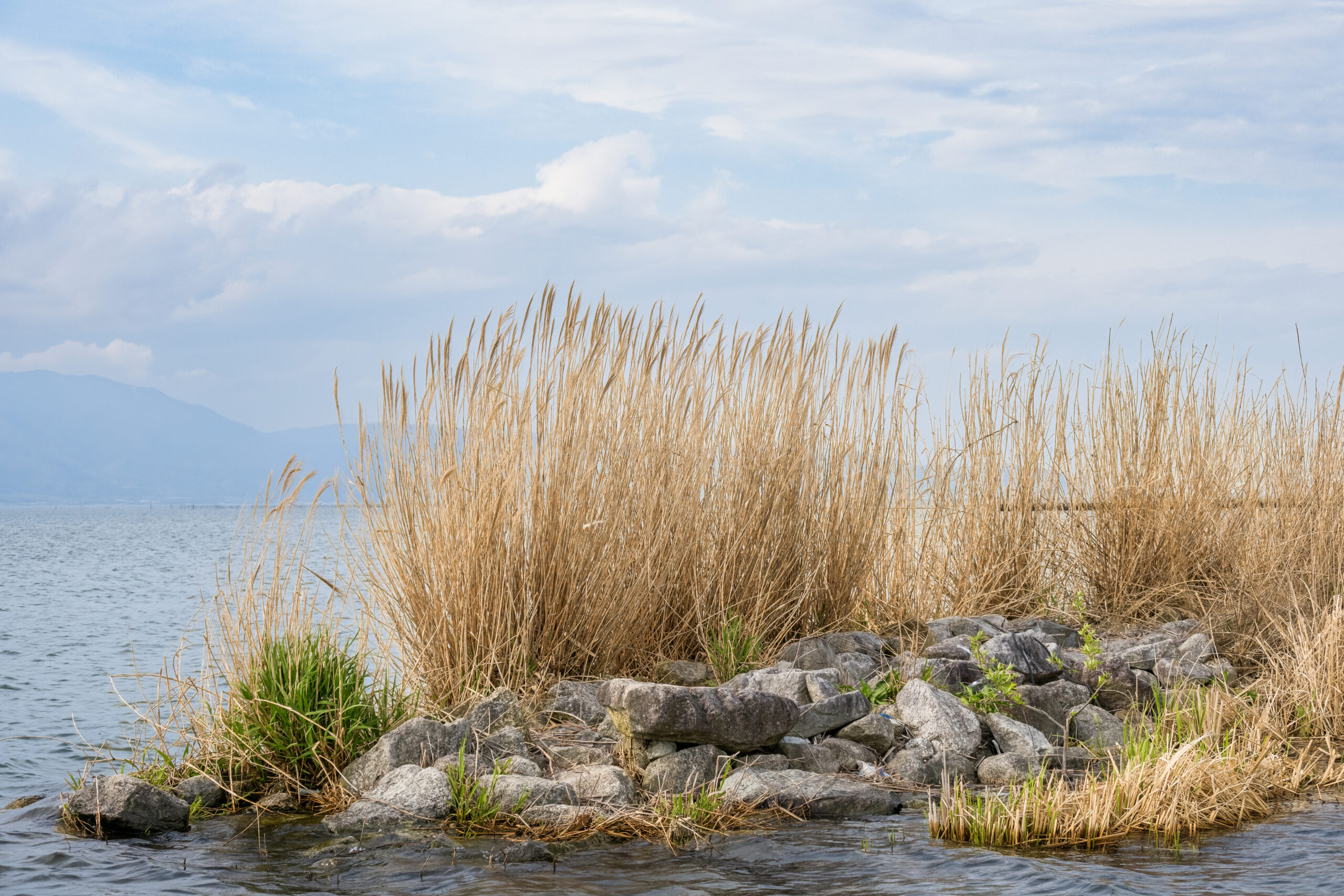
South Lake is a different fishery entirely. Fundamentally, this is weed fishing — dense grass beds, reed lines, and matted vegetation dominate the shallower, warmer water close to Otsu and Kyoto. But visible weed alone doesn’t tell the whole story: which grass lines are actually holding fish on a given day, which areas are even worth working, and where old submerged structures still sit beneath the vegetation are details that mostly live in the heads of guides who fish this water full-time. Within that weed-based framework, though, the range of techniques is wide: punching mats, working the edges with reaction baits, skipping baits under docks and overhanging cover, and flipping isolated clumps of grass all come into play depending on the day.
Unlike the North Lake’s roughly even split between spinning and baitcasting gear, South Lake fishing is overwhelmingly a baitcasting game. Pulling fish out of and away from heavy vegetation calls for the stronger lines and higher-power rods that baitcasting setups are built around, and light spinning tackle simply isn’t built for the job. This is also the water where much of Japan’s dedicated grass and cover fishing technique was refined, well before those methods spread to bass lakes elsewhere.
Because so much of the South Lake’s cover sits close to residential shoreline, canals, and small boat channels, local knowledge matters more here than almost anywhere on the lake — the difference between a productive grass line and an empty one is often a matter of a few meters, and it changes with water level and time of year.
Power and Reaction Techniques
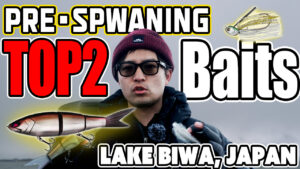
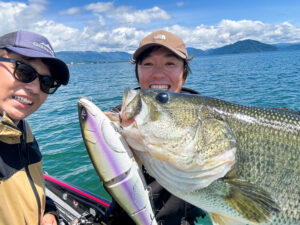
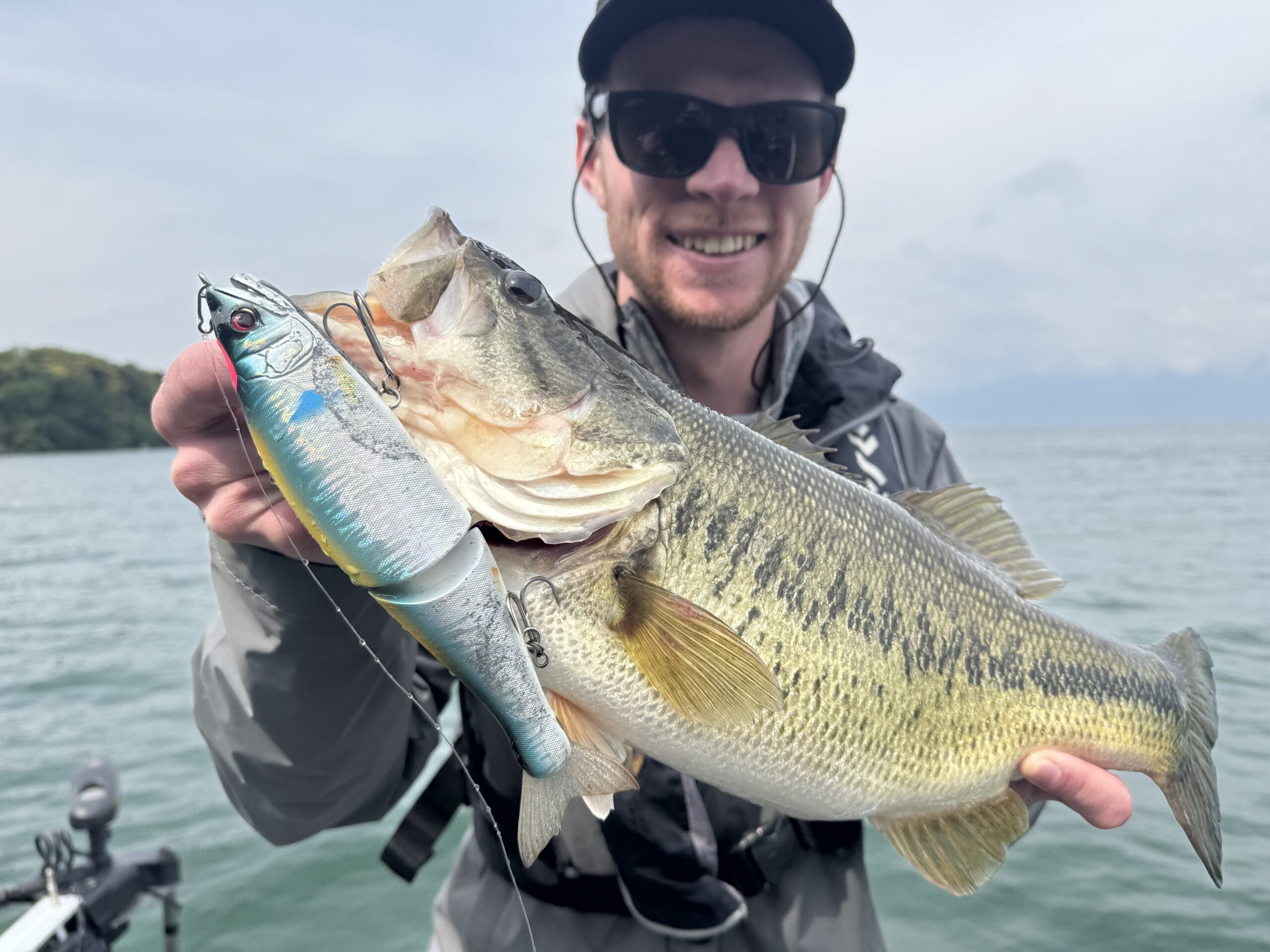
When bass are actively feeding or chasing baitfish, moving baits and big profiles get the call across both halves of the lake: swim jigs, glide baits, full-size crankbaits, and Alabama rigs. These techniques cover water quickly and trigger reaction strikes from fish that wouldn’t commit to a slower presentation, and they’re the techniques most associated with Lake Biwa’s trophy-fish reputation — giant bass chasing baitfish tend to give themselves away to a well-placed glide bait or swim jig rather than a finesse rig.
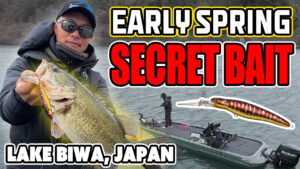
Early spring is when high-speed reaction cranking really comes into its own on Lake Biwa, well before the water warms enough for the moving-bait patterns above to take over.
Later in the season, moving into the pre-spawn period, the choice often comes down to swim jig versus glide bait rather than which crankbait to throw.
Finesse and Bottom Techniques
When the bite slows down or fish are pressured, precision beats power. Neko rigs, drop shots, and weightless (no-sinker) soft plastic rigs let you present a bait slowly and naturally in front of fish that have already seen plenty of moving lures, particularly over deep structure on the North Lake. Hover-strolling — suspending a soft plastic just off the bottom and easing it along at a controlled depth — and heavy, fast-falling bottom baits like Cover Scat round out the finesse side of the tackle box, especially useful for working fish holding tight to structure rather than actively chasing bait.
Sight Fishing and “Live Sight”
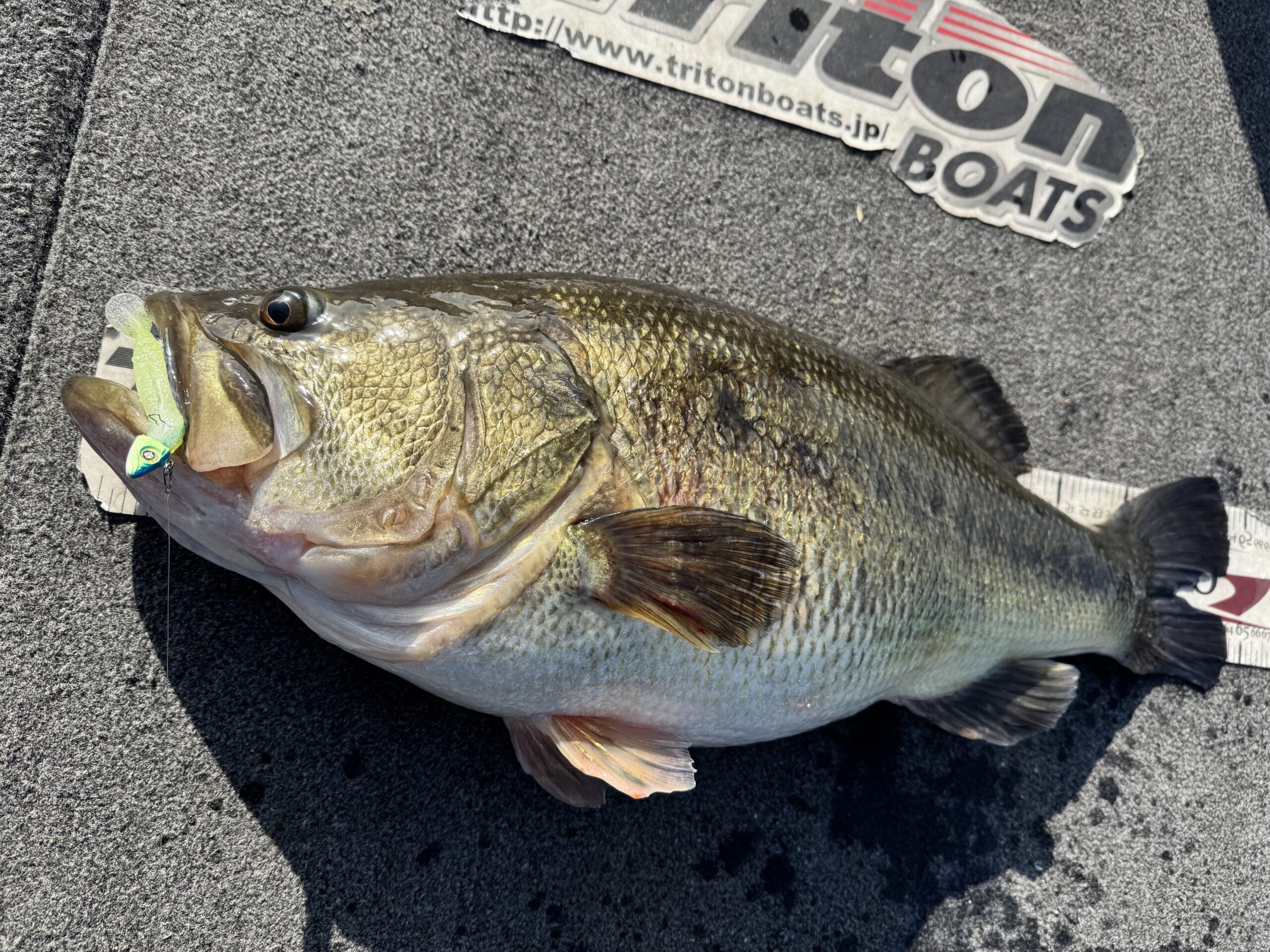
During the spawn, typically from May into June, technique shifts again toward bed fishing — targeting bass directly on their spawning beds. This is done two ways in tandem: traditional sight fishing by eye in shallow, clear water, and livescope-assisted “live sight” fishing, using forward-facing sonar to locate and target beds in water too deep or off-color to see into directly. It’s one of the more specialized techniques on this list, and one that rewards a guide’s local knowledge of where beds tend to form year after year. Because bed fish are visible and often catchable on nearly any lure presented correctly, the real skill lies less in lure selection and more in reading the fish’s behavior on the bed and presenting a bait without spooking it — a very different kind of pressure than working blind structure or open water.
Choosing the Right Tackle
As a rule of thumb: North Lake fishing calls for a mixed spinning-and-baitcasting setup split roughly evenly between finesse and power techniques, while South Lake fishing is a baitcasting-dominant game built around pulling fish out of weed and cover. Line choice follows the same logic — lighter fluorocarbon for clear-water North Lake finesse work, and heavier braid or fluorocarbon for horsing fish out of South Lake vegetation before they bury themselves in it.
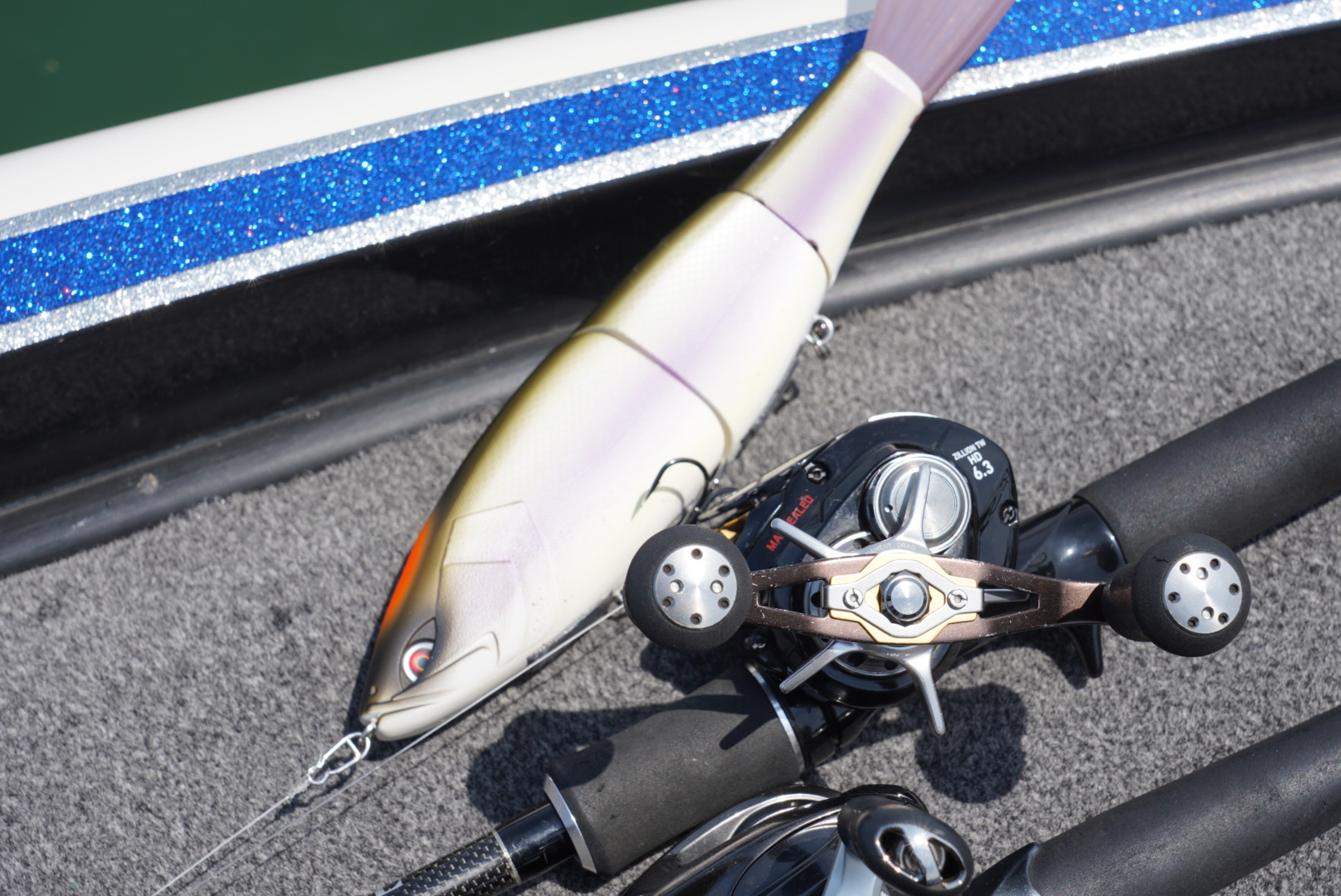
If you’re booking a guided trip, all of this tackle is provided, so there’s no need to travel with gear built for conditions you haven’t fished before. Curious what a typical day on the water actually looks like?
When you’re ready, booking a guide for Lake Biwa is straightforward.
None of these techniques exist in isolation from the calendar — what works in a given spot changes hard with the seasons. Our Lake Biwa overview links out to season-by-season guides for spring, summer, autumn, and winter, and is the best next stop if you’re planning a trip around a specific technique or time of year.