Most anglers who travel to Lake Biwa come for one fish: largemouth bass. But Japan’s largest lake holds another species found nowhere else on Earth — the Biwa trout, a salmon relative so distinctive that scientists only formally recognized it as its own species in 2025. If you’re fishing Lake Biwa, or simply curious what makes it more than just a bass lake, the Biwa trout is worth knowing about.
- Scientific name
- Oncorhynchus biwaensis, formally described as a distinct species in 2025
- Range
- Endemic to Lake Biwa — found naturally nowhere else in the world
- Also known as
- Biwa salmon (English), ビワマス / 長魚魚 (Japanese)
- Size
- Up to 70cm+, growing roughly 10cm a year for the first four years
- Best known for
- Vivid pink, salmon-like flesh and status as a prized local delicacy
- For foreign visitors
- Jigging only — trolling is legally restricted to Japanese nationals
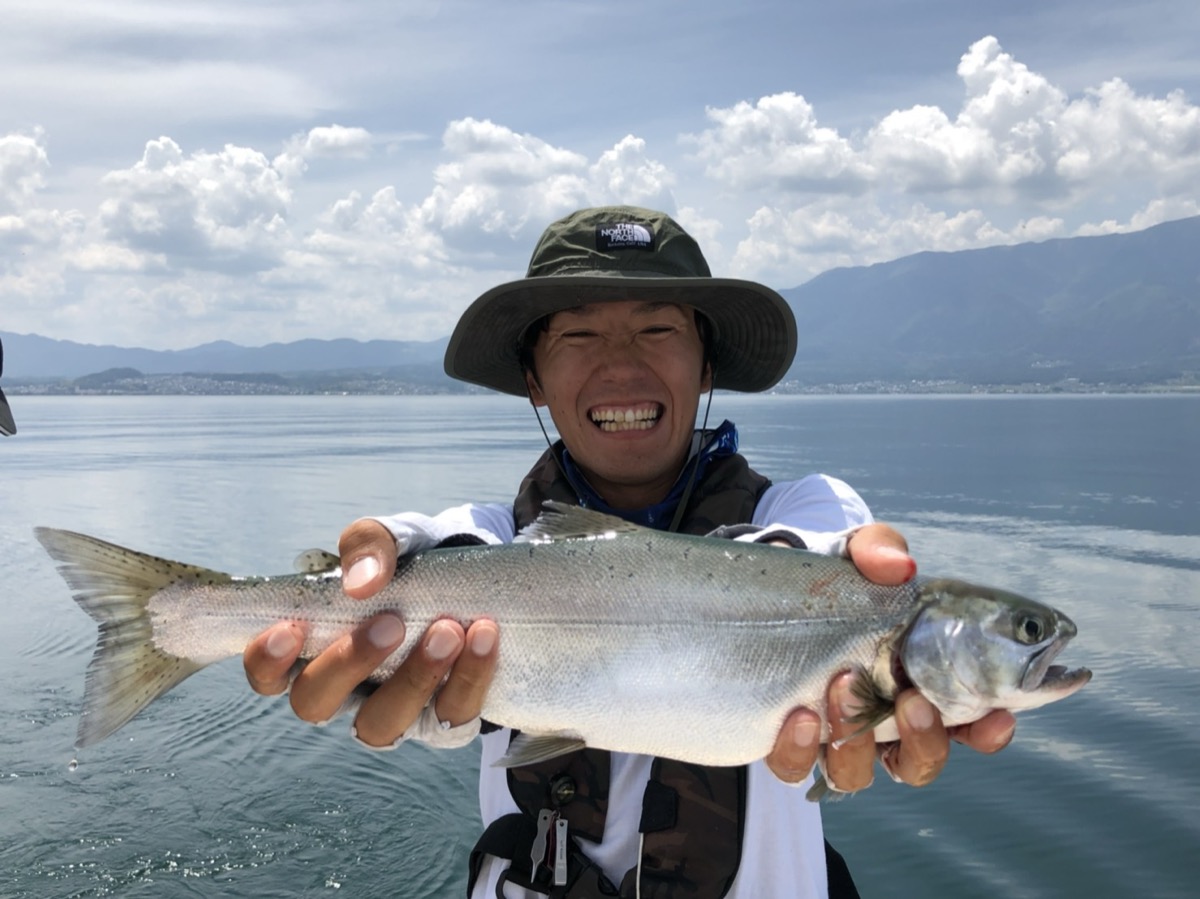
A Species Only Recently Recognized as Its Own
For decades, the Biwa trout was classified as a subspecies of the masu salmon (cherry salmon) group — a close relative rather than a species in its own right. That changed in June 2025, when researchers formally described it as Oncorhynchus biwaensis, a distinct species, based on renewed morphological study and population genetic analysis. It’s a reminder that Lake Biwa, despite being one of the most-fished and most-studied lakes in Japan, is still revealing new details about what actually lives in it.
Lake Biwa is still revealing new details about what actually lives in it.
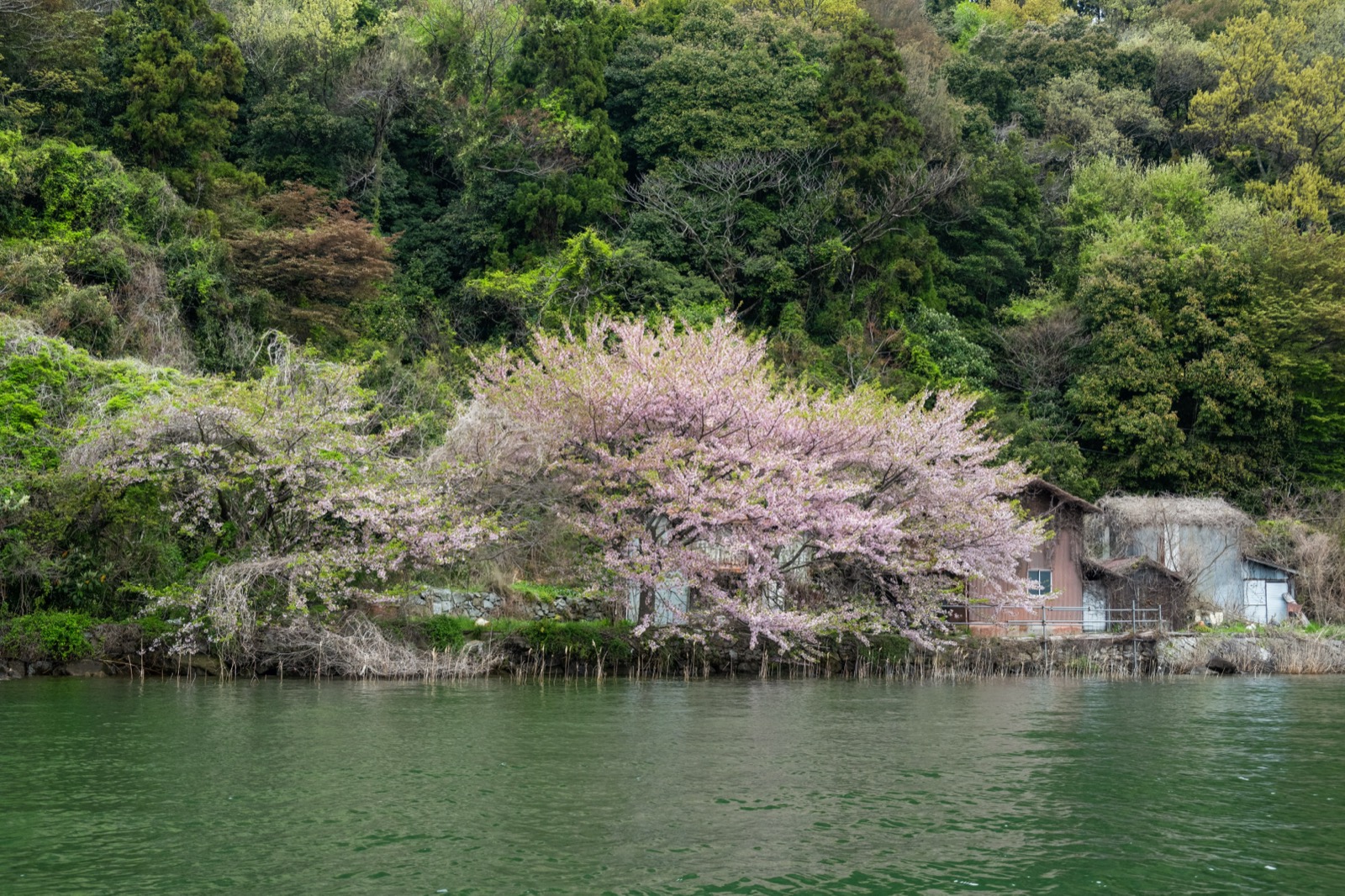
Found Nowhere Else on Earth
Biwa trout are endemic to Lake Biwa, meaning this population is the entire world population — they don’t occur naturally in any other lake, river, or ocean. That rarity has earned them a local nickname: “the jewel of Lake Biwa.” Combined with Lake Biwa’s ancient age — one of the oldest lakes on Earth — the Biwa trout is a genuine product of this specific body of water and nowhere else, in the same way the lake’s giant catfish and other endemic species are.
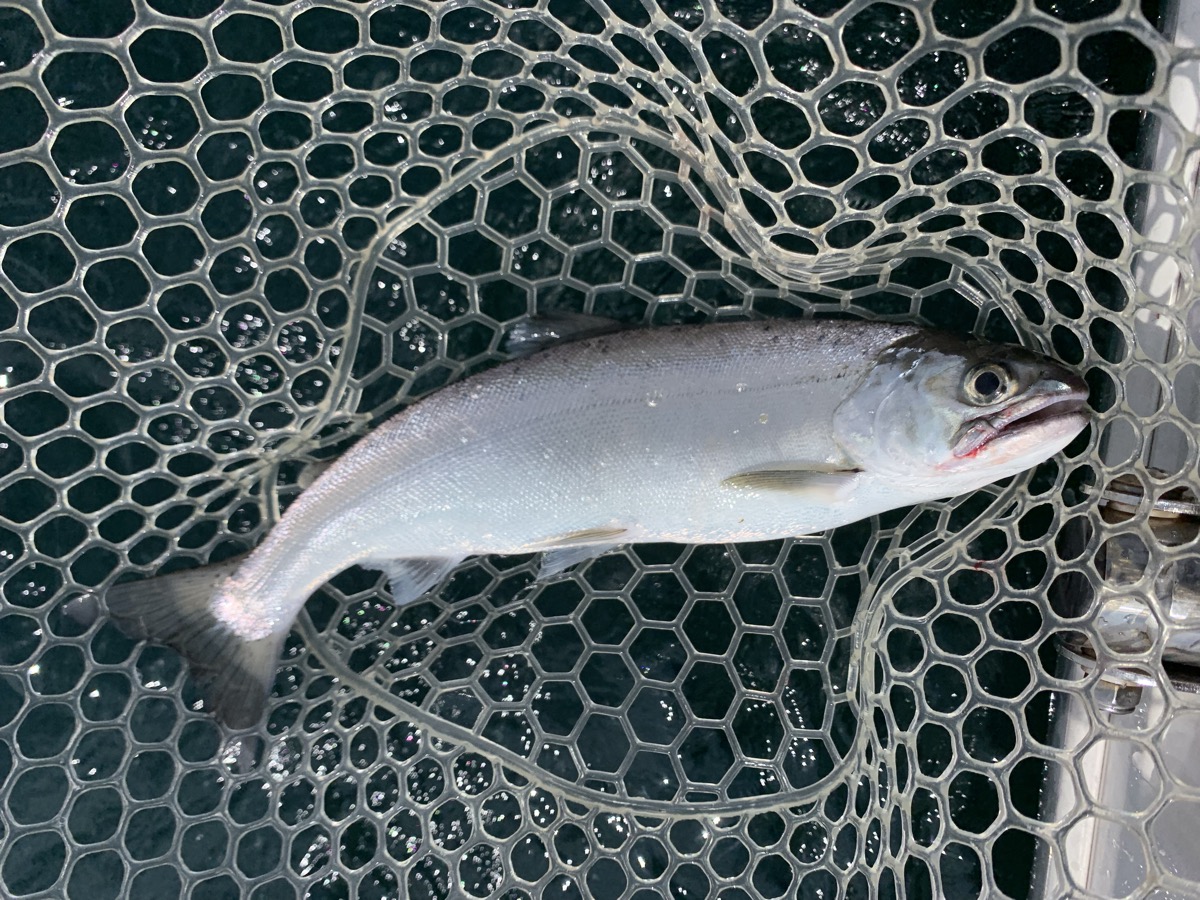
Life in the Lake, and a Run Up the Rivers
Young Biwa trout carry red parr marks along their sides that fade once they reach about 20cm in length. From there, they spend roughly two and a half to three and a half years growing in the open lake — reaching about 12–17cm in their first year, 24–30cm by their second, and up to 70cm at full maturity. When autumn arrives, mature fish leave the lake and migrate up rivers in the northern Lake Biwa watershed to spawn, typically from October into early winter, at water temperatures between 8–13°C.
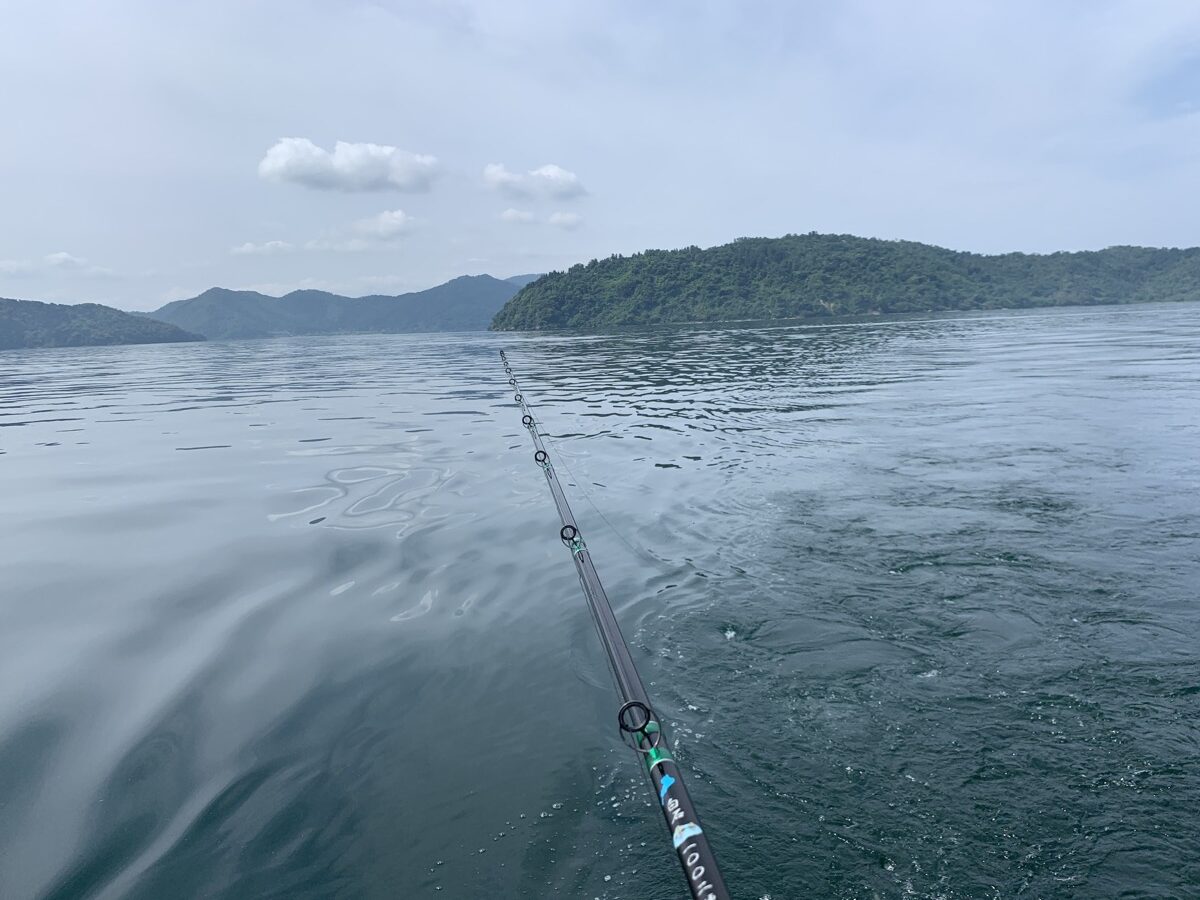
How Biwa Trout Are Fished
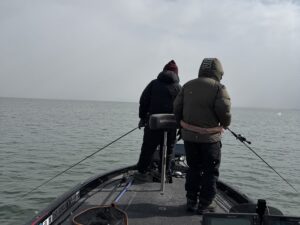
Biwa trout are targeted two main ways: trolling — covering open water with lures pulled behind a slow-moving boat, similar in concept to lake trout or salmon trolling elsewhere in the world — and jigging, working a metal jig vertically beneath the boat. Trolling is the more traditional, widely practiced method among Japanese anglers, and it’s done from everything from large pleasure boats to small rubber boats fitted with a small outboard motor. The season generally runs from December through September, with the most stable conditions in spring and summer; a closed season through October and November protects the fish during their spawning run up the rivers.
For visiting anglers, though, there’s an important legal distinction: under Japan’s Act on the Regulation of Fishing Operations by Foreign Nationals (外規法) and the Fisheries Sovereignty Act, foreign nationals are prohibited from trolling on Lake Biwa, regardless of licensing — a resource-protection rule applied nationally, even in prefectures where trolling is otherwise permitted. Jigging from a licensed fishing boat, by contrast, is explicitly permitted for foreign anglers under the same regulations. In practice, this means jigging is the only legal route for an international visitor to experience Biwa trout fishing.
Biwa trout fishing is also more tightly controlled than most freshwater fishing in Japan. Anyone fishing for Biwa trout from a boat — whether a private pleasure boat owner or a licensed trolling-guide operator — needs prior approval from Shiga Prefecture’s fisheries authorities, with commercial fishermen the only exception. Separate capacity limits apply to licensed fishing boats and to general individual applicants, and because demand consistently exceeds the available slots, places are allocated by lottery each year. Lake Biwa’s water police patrol the lake regularly and are known to question anglers found fishing without approval, so this isn’t a rule that goes unenforced.
Biwa trout jigging is a genuinely different discipline from the structure-and-lure bass fishing JBFA is best known for — open-water, vertical, and built around reading the fish’s depth rather than working cover. We do offer guided Biwa trout jigging trips: our guide Murahashi holds a dedicated Biwa trout guide qualification, making JBFA one of the few operators able to legally guide foreign visitors targeting this species. Get in touch if you’d like to add a Biwa trout jigging trip to your visit.
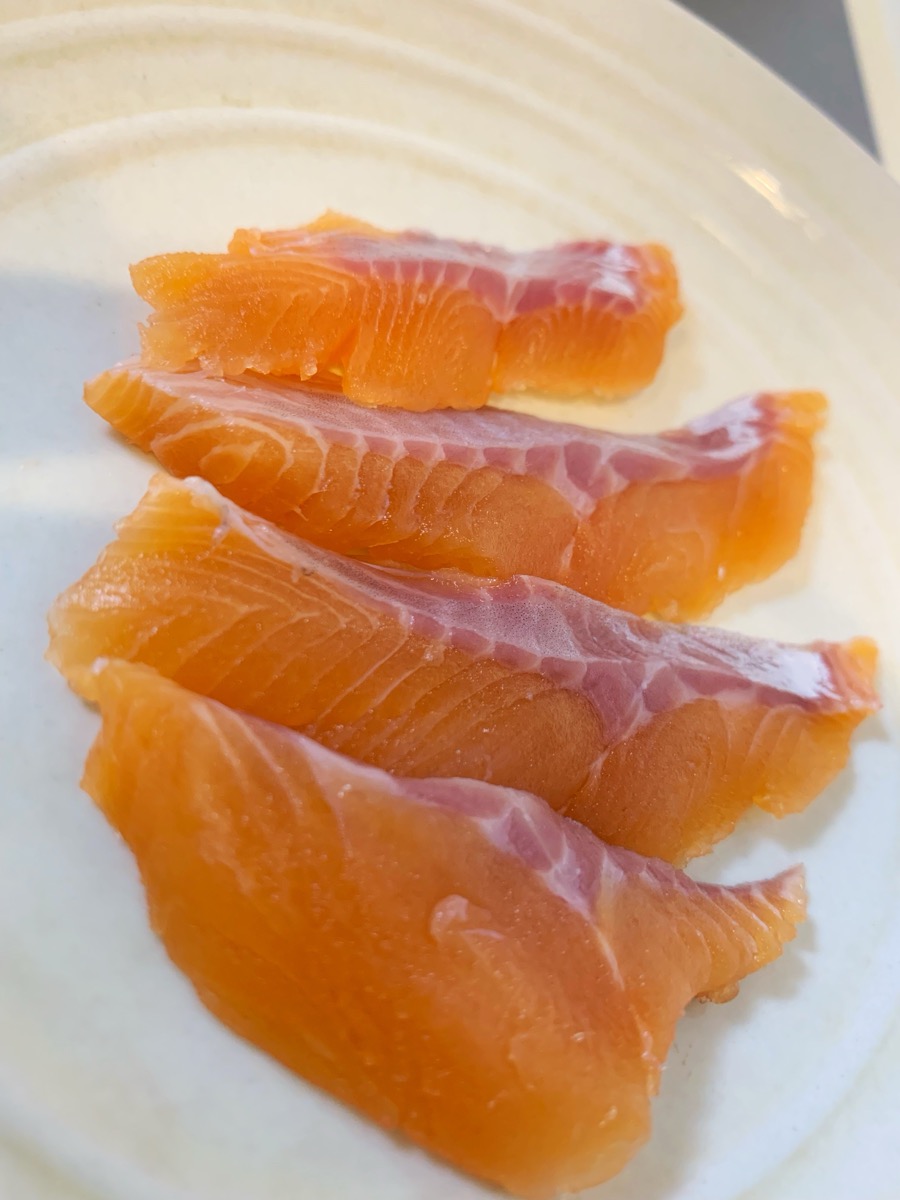
A Prized Catch on the Plate
Part of what makes Biwa trout special is what happens after the catch: the flesh is a vivid orange, closer to salmon than to most freshwater trout, and it’s considered a genuine local delicacy in Shiga Prefecture. Together with dishes like funazushi (fermented crucian carp sushi) and koayu (small sweetfish), Biwa trout is one of the signature tastes of the Lake Biwa region — worth seeking out at a local restaurant even if you’re not the one who caught it.
Two places we’d point you to: Yamamotoya Uohama, a restaurant in Nagahama City’s historic Kurokabe area run directly by a Biwa trout fisherman and dedicated entirely to Biwa trout dishes, and the Lake Biwa Museum, where Biwa trout also appears on the menu. Our guide to where to stay near Lake Biwa covers areas with good access to local Shiga cuisine.
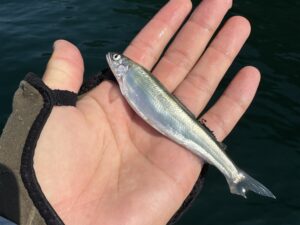
One more fish worth mentioning while we’re on the subject of eating what swims in Lake Biwa: largemouth bass is officially treated as an invasive species here, but it does appear on a menu or two as well — the Lake Biwa Museum and the Meishin Highway Otsu service area both serve it. So if you’re curious what the fish you’re catching (and releasing) actually tastes like, both Biwa trout and bass are, in their own way, on the table in Shiga.
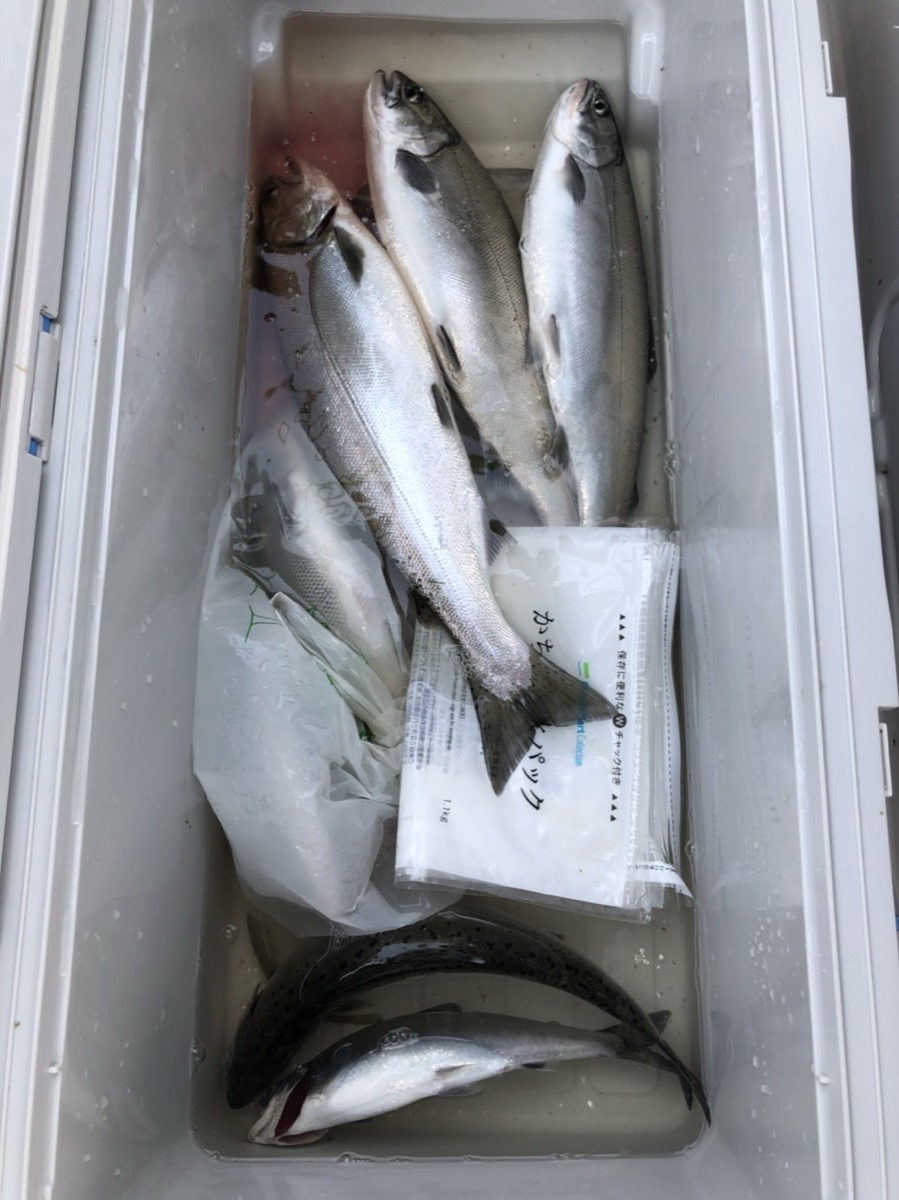
Part of What Makes Lake Biwa Different
Lake Biwa’s reputation with international anglers is built on bass — the world-record catch, the techniques born here, the sheer size of the fishery. The Biwa trout is a reminder that the lake’s significance runs deeper than any one species: an ancient lake, old enough and isolated enough to have evolved its own trout, its own giant catfish, and an ecosystem found nowhere else on the planet. Read more about the lake’s other native species in our guide to fish species in Lake Biwa, or see how to book a bass fishing guide in Japan to experience the lake for yourself.
Recommended Articles
Discover the top 4 fish species you can catch in Lake Biwa, Japan’s largest freshwater lake — from monster largemouth bass to the mysterious Biwako Giant Catfis…
Discover the story of Manabu Kurita’s world-record largemouth bass from Lake Biwa, Japan. Learn why this legendary lake produces giant bass and how you can fish…
Introduction Lake Biwa, Japan’s largest freshwater lake