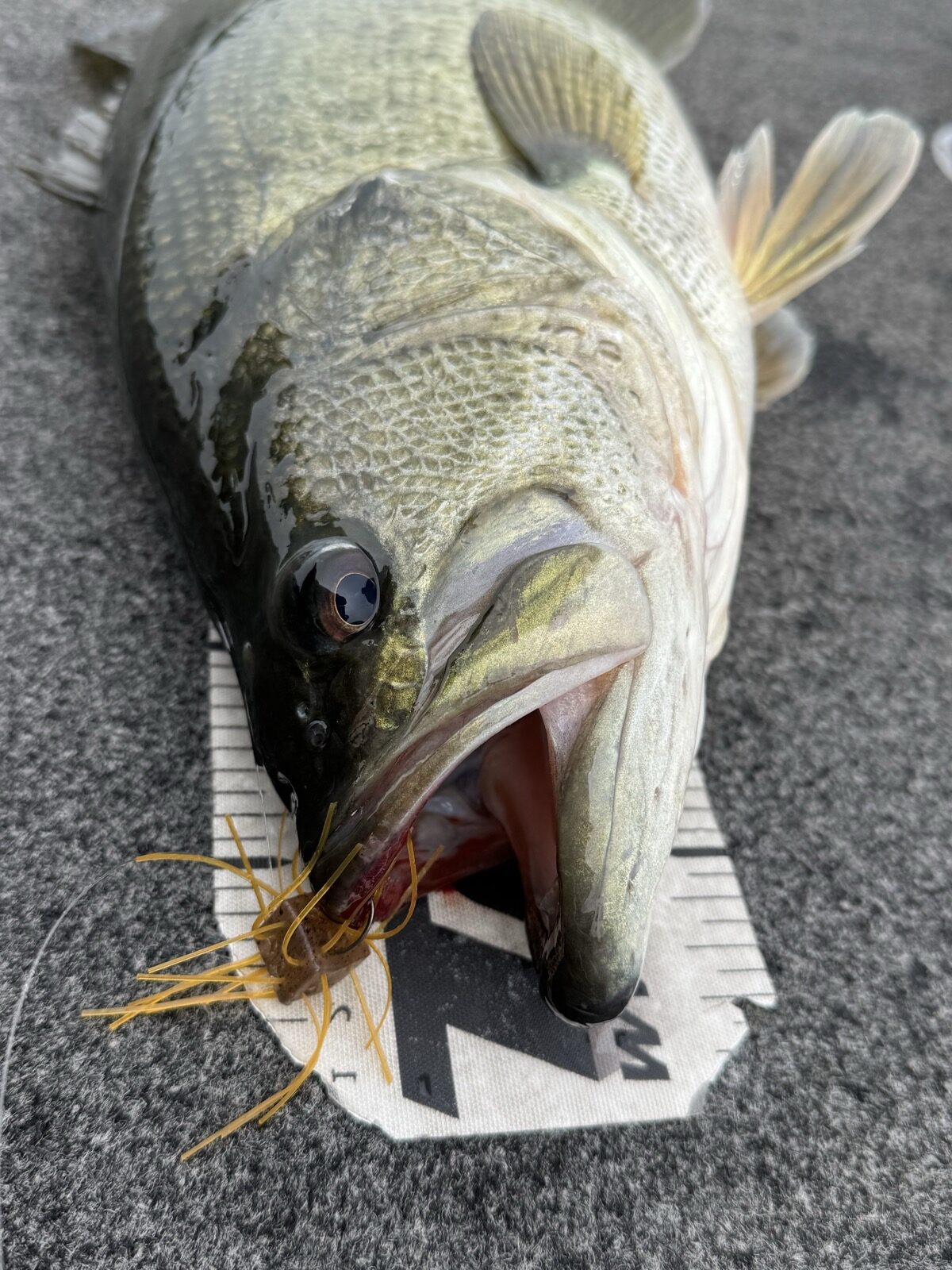
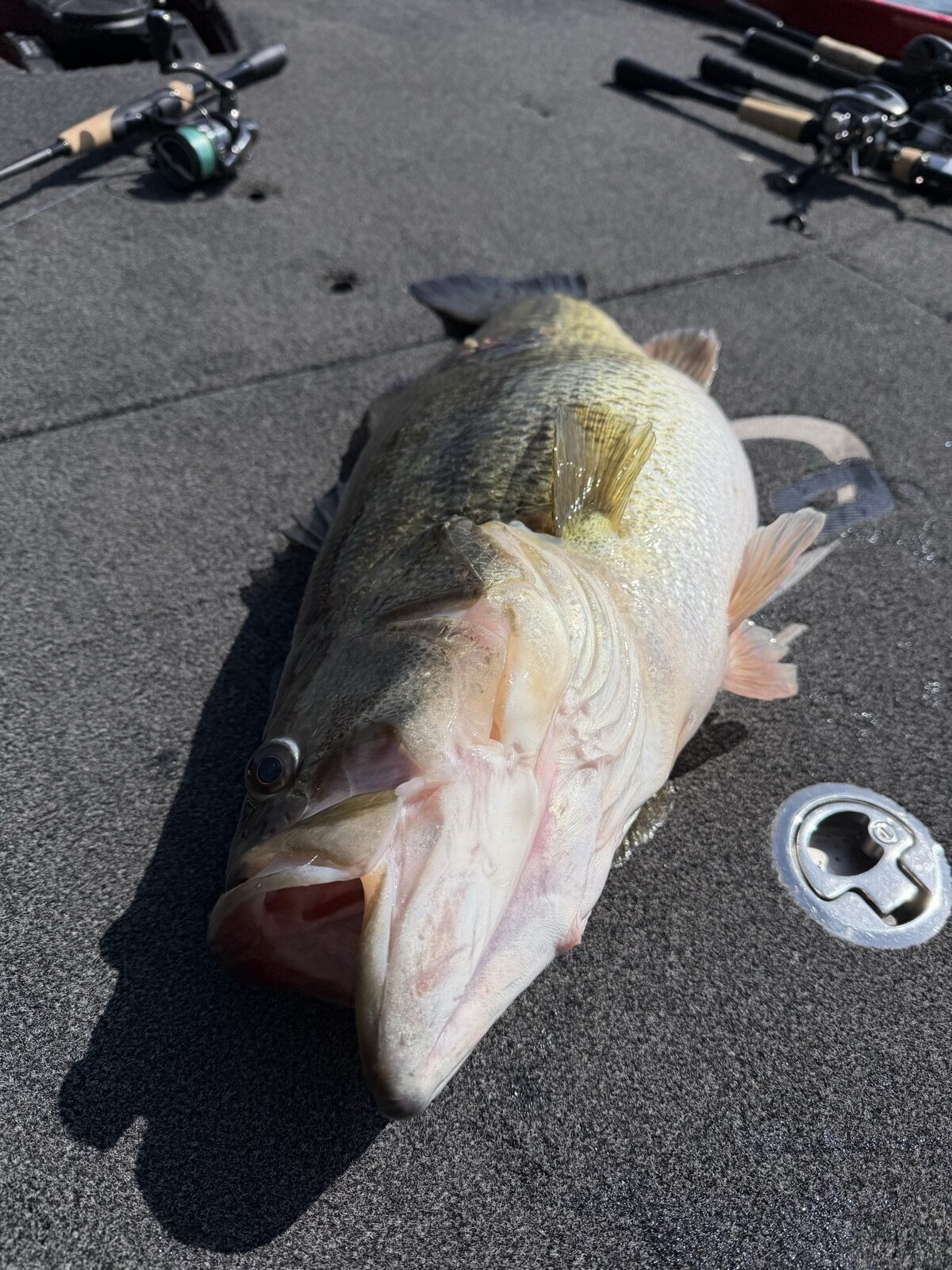
Every largemouth bass in Lake Biwa carries some mix of Florida-strain and Northern-strain genetics. And yet, if you spend enough seasons guiding North Lake (Hokko) specifically, a pattern becomes hard to ignore: North Lake bass tend to look distinctly different from what you’d expect — smaller-faced, deep-bodied, almost “football-shaped,” with noticeably large fins and large eyes. What follows is our own theory, built from years on this specific water rather than formal ichthyological research — but it’s a theory that’s changed how we read these fish, and how we fish for them.
A Body Built for Current
North Lake has a naturally occurring circulating current running through it — a phenomenon we cover in full, mixing research with our own guiding experience, in our dedicated article on North Lake’s currents. Our working theory is that generations of North Lake bass have effectively grown up swimming in that current, and their build reflects it.
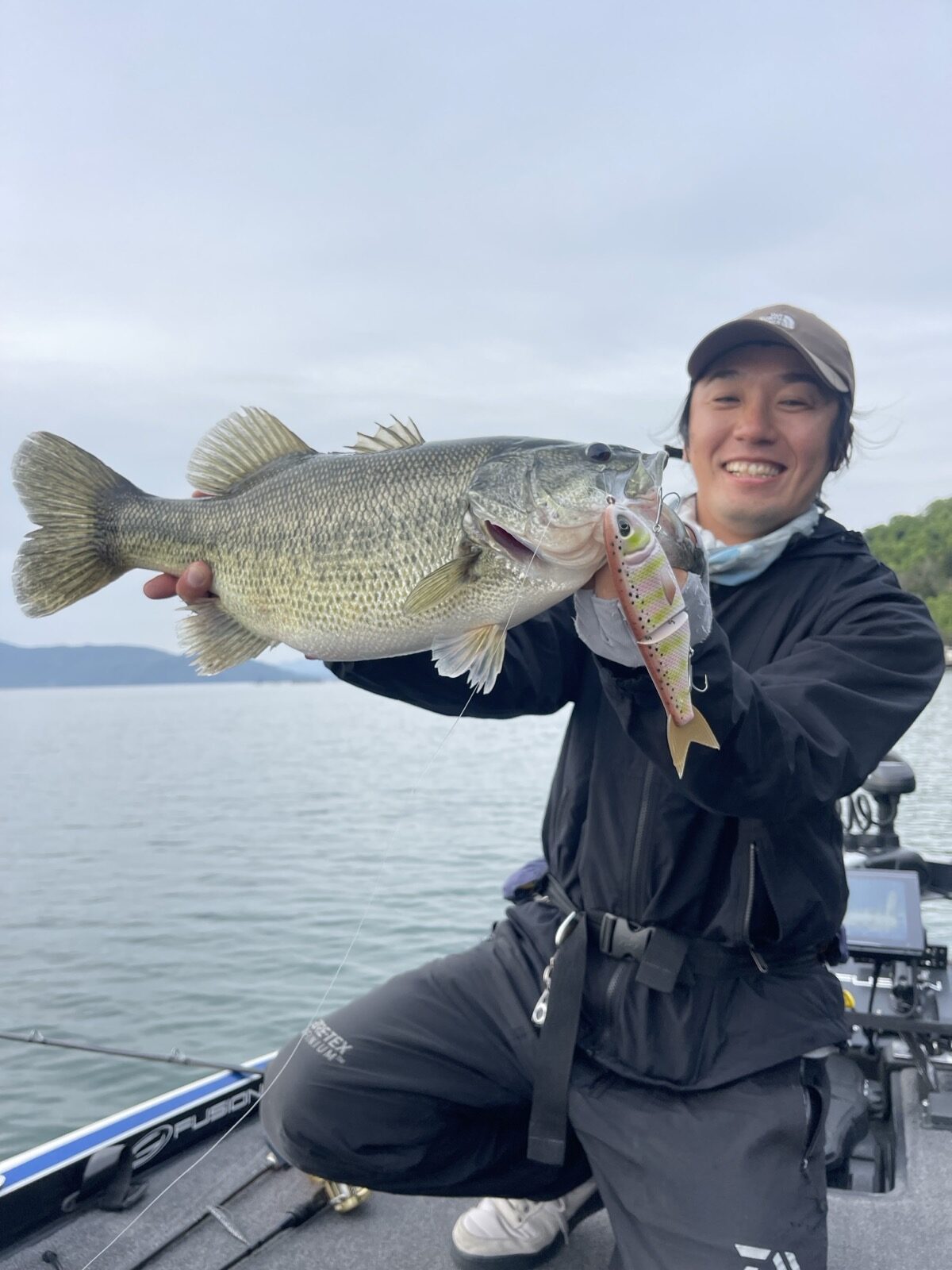
A smaller head and face reduce water resistance while swimming. A deeper body — more body height relative to length — supports a stronger, more energetic swimming style suited to holding position and moving through current rather than drifting with it. And if you look closely, North Lake bass tend to have noticeably large, well-developed fins across the board, which fits the same picture: fish built for powerful, sustained swimming rather than the more sedentary profile you’d see in calmer water.
These fish look like they were built for swimming in current, not drifting through calm water.
Mouth Size Tells You What They’re Eating
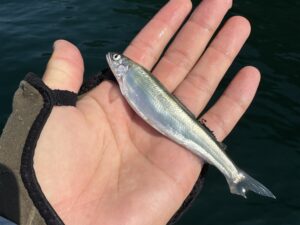
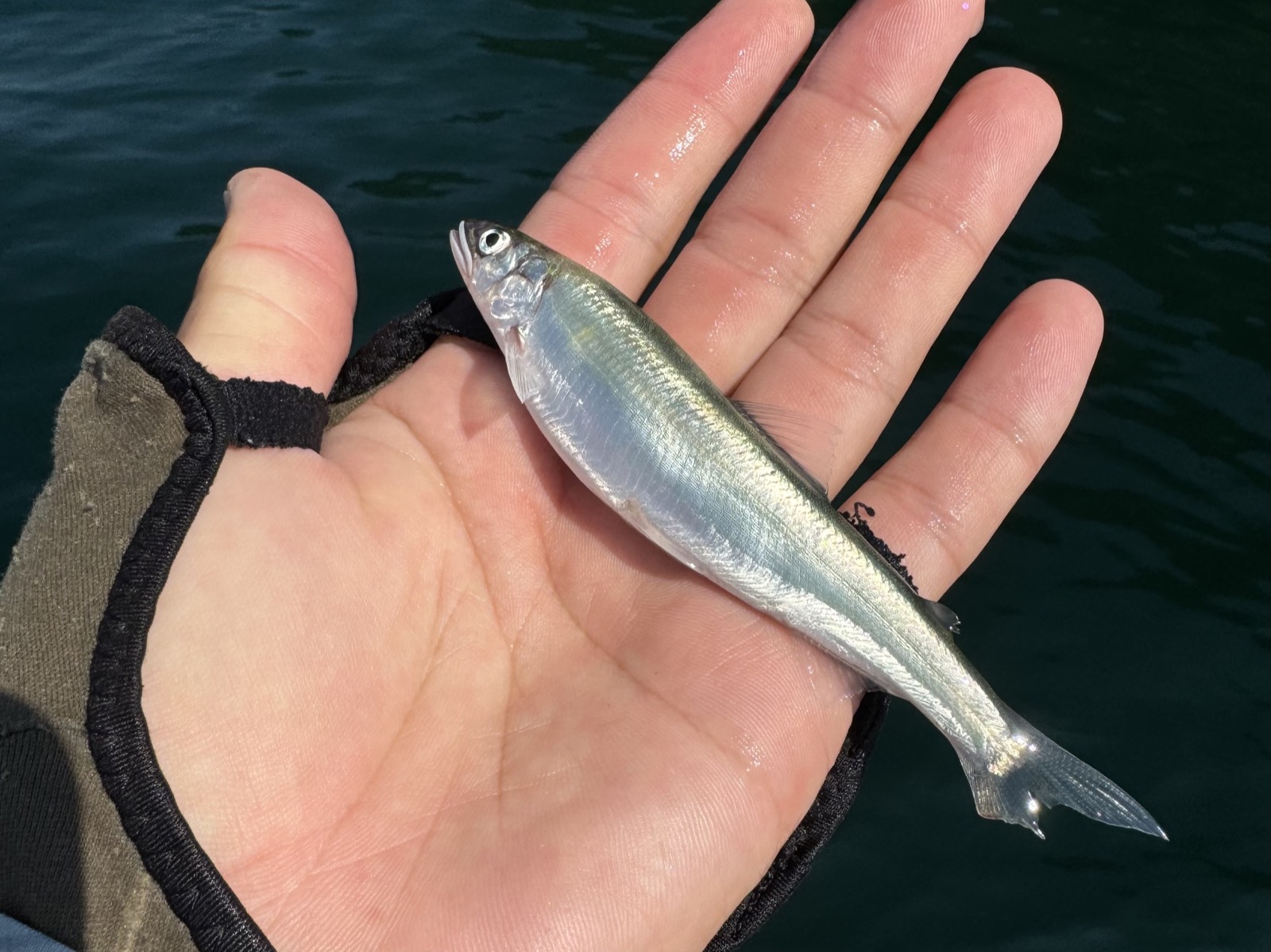
Mouth size is one of the clearest tells, and it lines up closely with forage. North Lake bass typically feed on slender baitfish — ayu (sweetfish), wakasagi (pond smelt), and hasu — and their mouths tend to be correspondingly small and precise, built for picking off narrow-bodied prey rather than engulfing something round.
South Lake tells a different story. Historically, bluegill were the dominant forage on the South Lake side, and older South Lake bass show it: noticeably larger mouths, built to swallow a rounder, deeper-bodied baitfish in a single bite. Same species, same lake, two very different mouths — shaped by two very different diets.
Built to See: Eyes, Water Clarity, and Lure Wariness
North Lake’s water is exceptionally clear — on a good day, visibility can reach 5 meters. Our theory is that this clarity has driven a real visual adaptation: North Lake bass tend to have noticeably larger eyes than largemouth bass elsewhere, and their behavior backs that up. These fish appear to rely heavily on visual information when deciding whether to eat — and that has direct, practical consequences for anyone fishing for them.
Watch enough Livescope footage on North Lake and you’ll see it constantly: a bass charges a lure with real intent, then peels off and refuses it at the very last moment — visibly “deciding” not to eat once it gets close enough to really look. In certain areas and water conditions, we’ve watched bass sitting at 10 meters spot a lure running at 3 meters and rocket straight up from the bottom to intercept it — a 7-meter vertical read that’s hard to explain without genuinely sharp vision doing a lot of the work. Largemouth bass are also generally understood to sense prey location through their lateral line, so this isn’t the whole story — but on North Lake, sight appears to be doing more of the heavy lifting than it does on many other fisheries.
The practical upshot: North Lake bass learn fast, and they get lure-shy fast. Lure choice, presentation, and even boat position all matter more here than on a lake where fish are feeling their way through murkier water. It’s a big part of why finesse presentations and precise structure reading — the techniques Lake Biwa is famous for — developed here in the first place.
What Their Skin Tells You
One more pattern worth watching for: diet seems to show up on the fish’s skin, not just its body shape. Bass that have been feeding heavily on baitfish tend to have a glossy, clean-looking surface — sometimes almost too glossy, with a slightly oily sheen that looks like the result of a genuinely rich, high-calorie diet. Bass that have been feeding more on crustaceans tend to look a little rougher, less healthy, and visibly different from the classic glossy, football-shaped, fish-eating North Lake bass.
Smell tracks the same pattern. Bass that have been feeding mainly on baitfish tend to have very little detectable odor. Bass feeding more heavily on crustaceans, by contrast, often carry a noticeable smell. There’s a second, unrelated case worth mentioning too: during the spawn, when sight-fishing beds and deliberately provoking a guarding bass into striking out of aggression rather than hunger, the fish you land this way tends to give off a strong, distinct odor — a stressed-fish smell rather than a diet-driven one.
Why This Matters If You’re Fishing Here
None of this is just trivia. If North Lake bass are this visually driven, this well-adapted to current, and this quick to learn a lure, then how you approach them — lure selection, presentation speed, even how you position the boat — has to account for it. This is exactly the kind of pattern that’s hard to pick up on without years of guiding this specific water, and it’s a good example of why local, current knowledge matters as much as it does on Lake Biwa. See our complete guide to Lake Biwa for more on how North and South Lake differ, or book a guide to see these fish for yourself.
This is an evolving piece based on our guides’ ongoing observation of North Lake bass — we’ll continue to update it as we have more to add.
Recommended Articles
Everything international anglers need to know about Lake Biwa bass fishing: history, North vs South Lake, species, seasons, rules, and how to book a guide.
Japan offers a unique bass fishing experience, combinin
Discover World-Class Bass Fishing in Japan – Even Witho