In our theory on why North Lake bass look different, we mentioned a phenomenon that deserved its own explanation: North Lake has a naturally occurring circulating current running through it. This one is different from the rest of that piece — it’s not just a guide’s theory. Lake Biwa’s internal currents are one of the most studied subjects in Japanese limnology, with research going back nearly a century. What follows mixes that research with what we’ve actually seen and felt on the water, guiding this lake year-round.
- What it is
- Large, rotating currents (gyres) inside North Lake, studied since the 1920s
- Main cause
- Wind stress during the stratified season (roughly May–December)
- Number of gyres
- Classically described as three; the most rigorous field measurement found two clearly
- Where it’s strongest
- The deep central “body water” / main channel area, by guide observation
- Fishing impact
- Bass seem more active in current, but lure control and presentation get harder
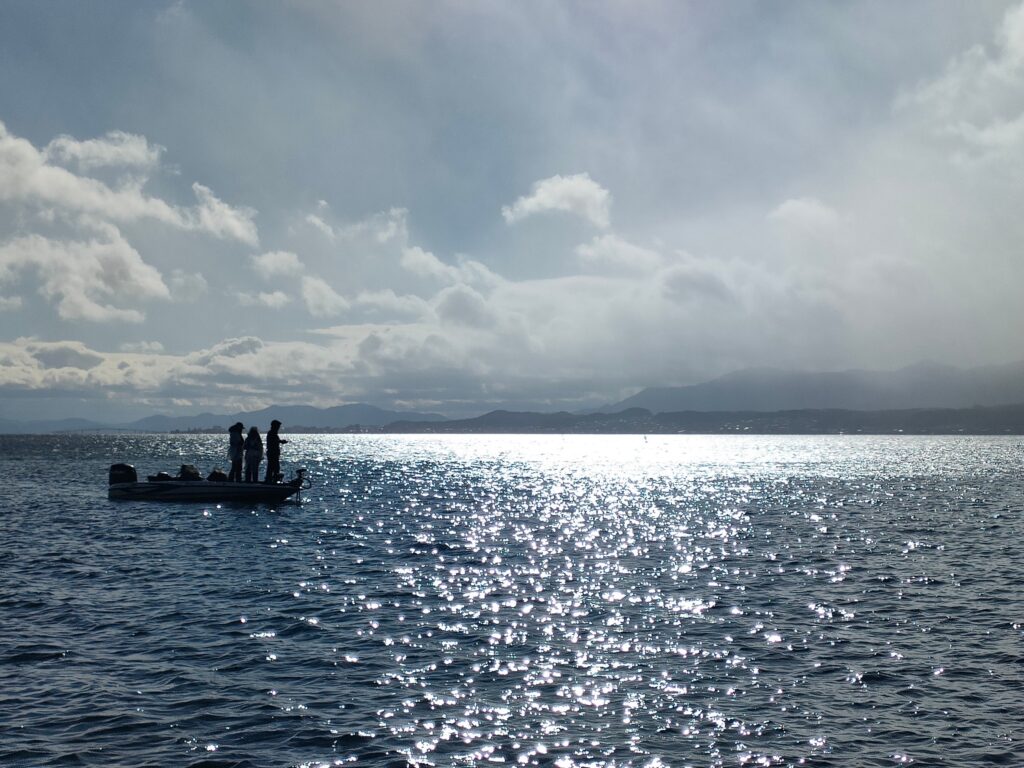
A Real, Well-Studied Phenomenon
North Lake’s rotating current system was first noticed in 1926, confirmed in the 1960s as a geostrophic current — meaning it’s balanced by the Earth’s rotation rather than just pushed directly by wind — and has been mapped repeatedly since, using current meters, tracked drifters, and numerical models. This isn’t folklore or a local myth; it’s one of the better-documented physical features of the lake.
The current is driven mainly by wind blowing steadily over the lake during the stratified season, when warmer water sits on top of colder water beneath. Because the resulting current is geostrophic, it doesn’t switch off the moment the wind does — it can keep turning for days, sometimes longer, as a large, slow, rotationally balanced flow. Once winter arrives and the lake fully mixes top to bottom, the stratification that supports the gyres breaks down, and the current system disappears until the following spring.
A current you can’t see from the surface can still be moving everything beneath it.
Three Currents, Three Characters: What We See on the Water
Our own read of North Lake, built from guiding it across seasons, is that it holds three separate circulating currents by area, each running either clockwise or counterclockwise, alternating as you move through the lake. That matches the classic textbook picture of Lake Biwa’s gyre system. Worth being precise about, though: the most rigorous field study to date — using actual current meters and drifter tracking rather than models — clearly identified two large gyres, and reported that a proposed third was not clearly observed in the data. The three-gyre picture isn’t disproven, but it’s the traditional model rather than the most directly confirmed one. Either way, it lines up with what we feel on the water: distinct zones of current, not one uniform flow across the whole lake.
In our experience, that current is easiest to feel in the deep, open central water — what many local anglers call the “body water” or main channel — though it’s noticeable in other areas too, just less consistently.
Why the Water Can Be Moving Even on a Dead-Calm Day
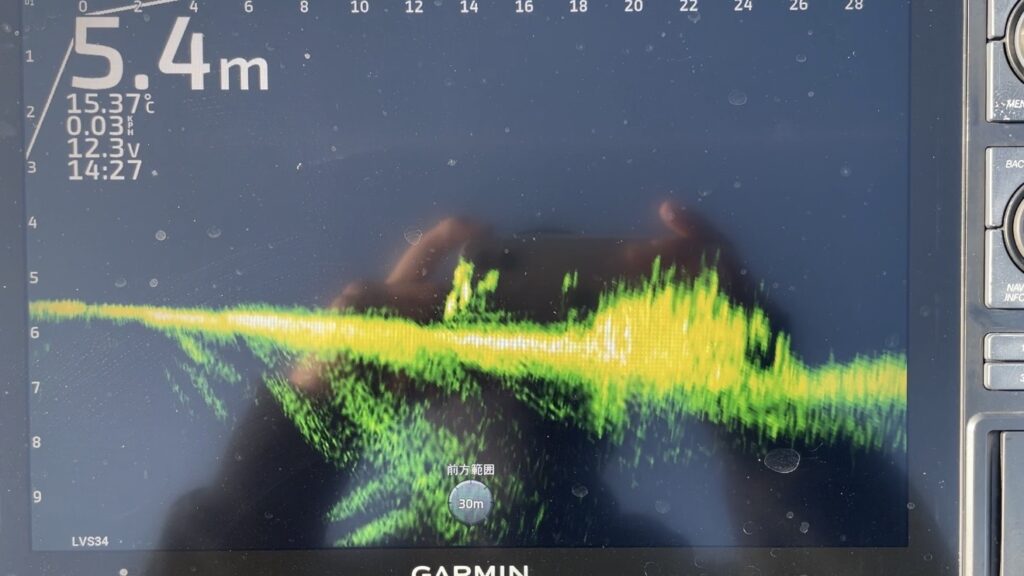
This is where the science and our own observation line up most closely. Because these currents are geostrophic, they can keep running strong well after the wind that originally drove them has died down completely. We’ve fished plenty of windless, glass-calm days on North Lake where the current was still running hard — and the research on how these currents behave gives a real physical reason why, rather than it just being a strange coincidence.
What Changes the Current: Weather, Rain, and the Seta River Sluice
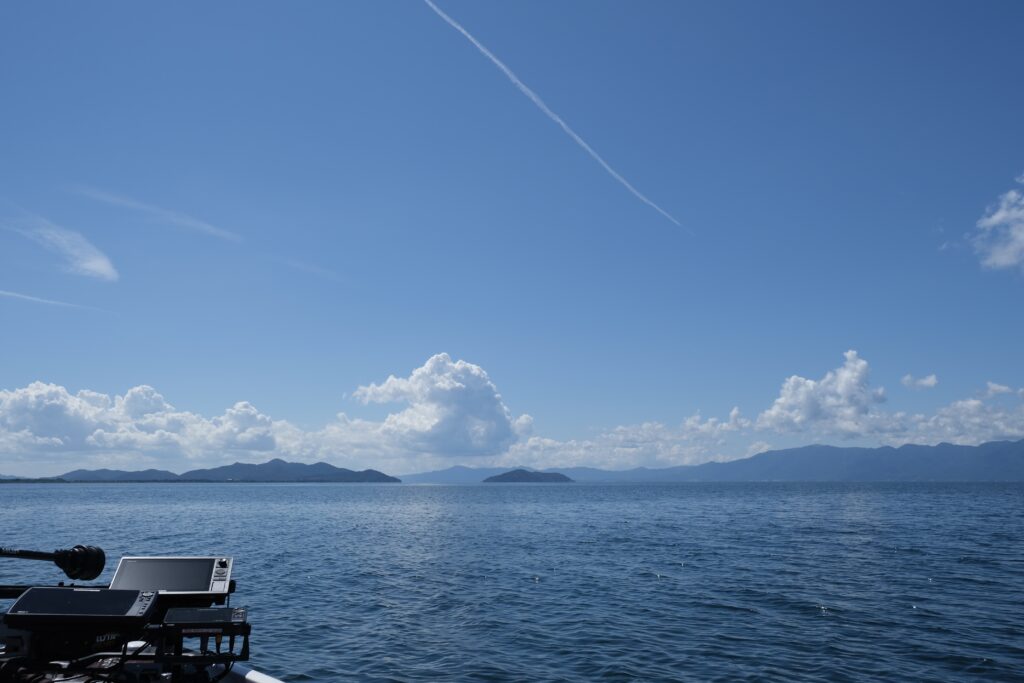
Beyond the day-to-day wind-driven pattern, a few things seem to shift how the current behaves. In our experience, the day after rough weather, or when rivers are running high from rain, the current feels noticeably different — this tracks with basic physical intuition, but we haven’t found published research that directly confirms it, so we’re presenting it as our own field observation rather than established science.
The Seta River Sluice controls how much water flows out of Lake Biwa via the Seta River, the lake’s only natural outlet. In our experience, how open or closed that gate is at any given time affects the strength of the current across the wider lake — more outflow tends to mean a more noticeable pull toward the Seta River, less outflow means a calmer overall system. The documented, measured effect of the sluice’s outflow is a localized current near the river mouth, extending a few kilometers; we haven’t found published research confirming how far that effect extends across the rest of the lake, so the wider connection is our own working theory built from time on the water rather than a confirmed research finding.
Why This Matters If You’re Fishing Here
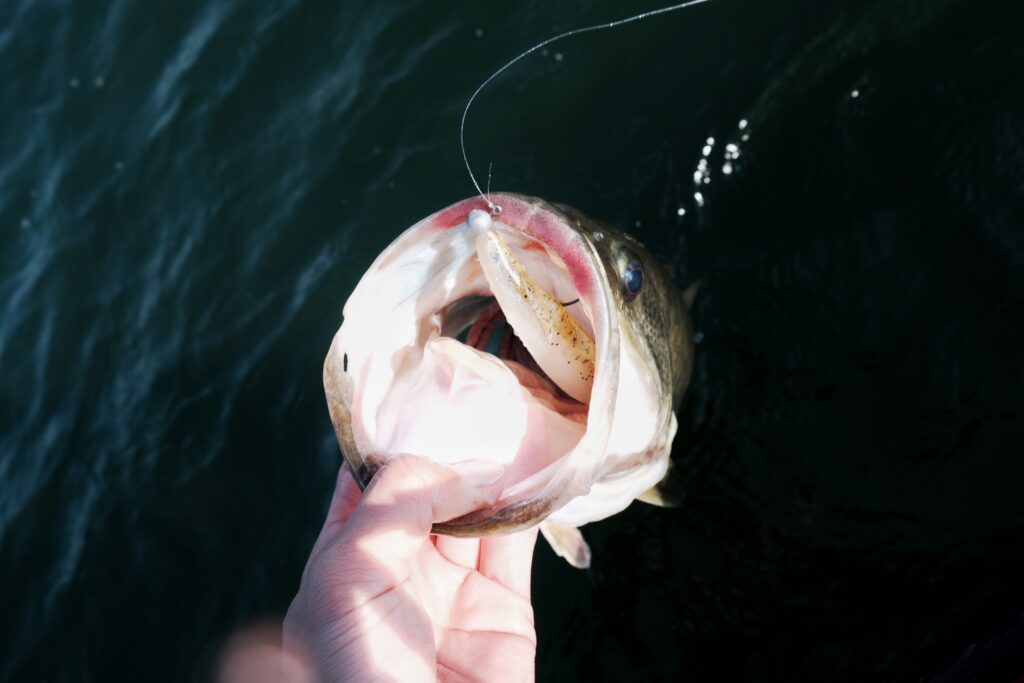
Current changes how North Lake fishes, and it’s part of the same picture we described in our piece on why North Lake bass look different: fish that have effectively grown up swimming in this current seem to respond well to it, often feeding and reacting more actively when it’s running. The tradeoff is practical rather than biological — current pushes a lure off its intended line and drifts it away, which makes it harder for a bait to actually reach bottom, and makes precise presentation harder overall, especially with the finesse tactics this lake often calls for.
On days with a strong current, we’ll typically size up sinker weight to keep a bait in the zone and adjust lure choice toward presentations that hold up better against the drift, rather than fighting the current with the same setup we’d use on a calm day. Reading how much current is actually running — not just what the wind is doing on the surface — is one of the things that comes with real time on this specific water.
This is an evolving piece, mixing published research on Lake Biwa’s gyre system with our own guiding experience on North Lake specifically. See our guide’s theory on North Lake bass adaptation for the related piece this one was written to follow up on, or book a guide to experience this water for yourself.